

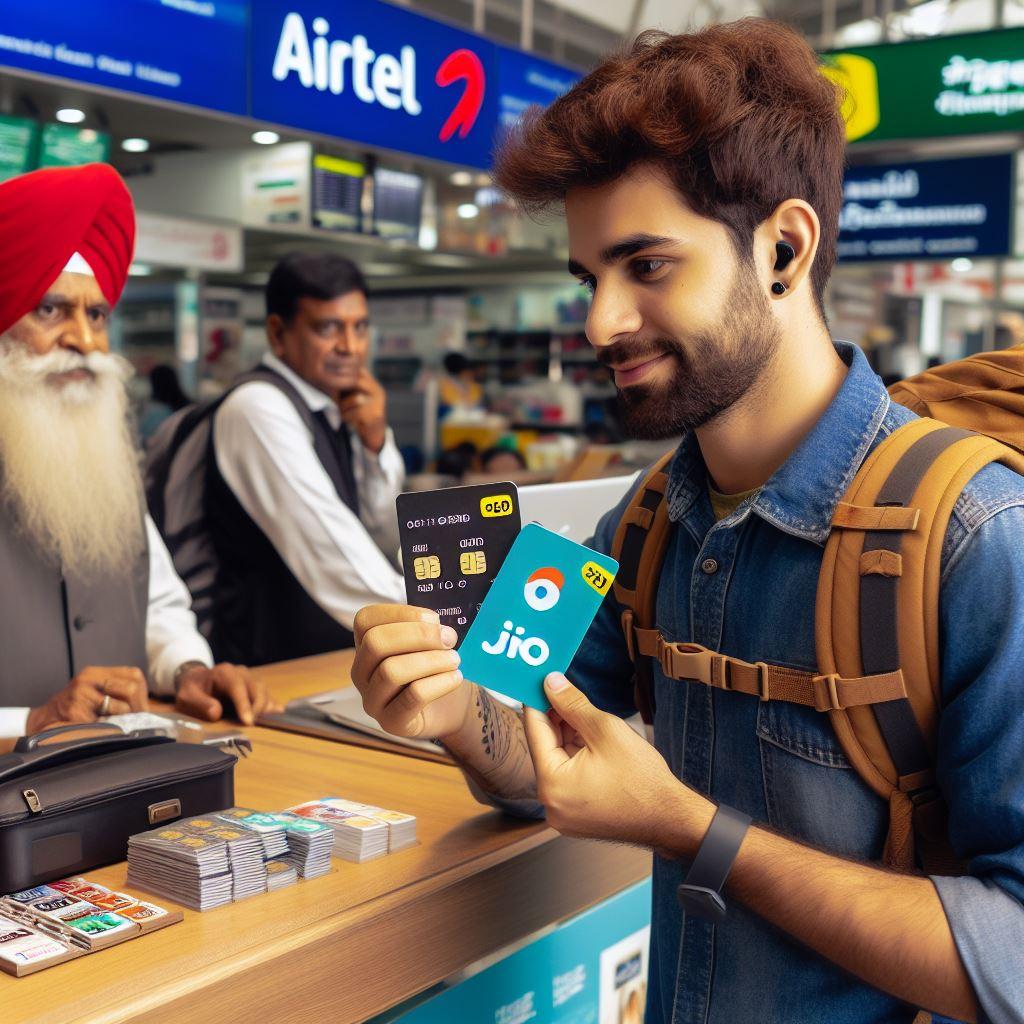
India’s connectivity offers widespread 4G and emerging 5G networks making it easier for travelers to stay online. Whether you’re navigating bustling cities like Delhi or remote areas in Rajasthan, reliable internet is key for maps, bookings, and communication. This guide breaks down your options for mobile data and Wi-Fi, tailored for different trip lengths. We’ll cover practical steps, costs, and tips to avoid common pitfalls, helping you save money and time.
📱 Mobile Data Options
If your trip is brief, this is often the simplest choice. Contact your provider before leaving to activate international roaming for India. Expect data speeds similar to local networks, but watch for high costs — roaming can run $5–15 per day depending on your plan. It’s convenient for seamless number retention, but compare rates to avoid bill shock.
For extended visits, a local SIM is the way to go — it’s far cheaper and integrates you into everyday Indian digital life. Expect 4G/5G access in most places, though signals can drop in hilly regions like the Himalayas.
🏢 Choose Your Carrier
✅ Benefits of a Local SIM
- Affordable data plans: Unlimited data starts at around ₹200–500 ($2.50–6) per month, with high-speed allowances of 1.5–3GB daily before throttling.
- Unlimited local calls: Most plans include free calls and SMS within India, perfect for coordinating with locals or drivers.
- Two-factor authentication: Local SIMs help with Indian bank apps or train bookings via IRCTC, and avoid international roaming fees entirely.
📲 Useful Indian Apps
🪪 What You Need (KYC Requirements)
- Unlocked or dual-SIM phone — ensure your device isn’t carrier-locked; test it before travel.
- Passport and Indian visa (photocopies) — mandatory for KYC (Know Your Customer) verification.
- Passport-sized photo — some stores require it; bring a few just in case, though digital uploads are increasingly common.
If your phone supports it, use a dual-SIM setup to keep your home number active for iMessages or calls while using the Indian SIM for data.
🏪 Where to Purchase
Visit branded Airtel, Jio, or Vi outlets — use Google Maps to find one nearby. These are reliable and offer English-speaking staff in tourist areas.
Steer clear of third-party online sellers or small, unauthorized mobile stores — they’re prone to scams like fake SIMs or overcharging. Stick to official channels to ensure legitimacy and proper activation.
💰 Plan Options at a Glance
Duration |
Data / Day |
Approx. Cost |
Best For |
|---|---|---|---|
28 days |
1 GB/day |
~₹200–300 |
Light Users |
60 days |
1.5–2 GB/day |
~₹300–400 |
Moderate Users |
90 days |
3 GB/day + OTT |
~₹400–500 |
Heavy Streamers |
Check in-store for bundles that include OTT app subscriptions like Netflix or Hotstar. Recharge via MyJio or PhonePe for easy top-ups anywhere. International calling add-ons are available if you need to phone home.
⏱️ Activation
⚠️ Important Notes
- No anonymous SIMs — all SIMs require ID verification; it’s illegal otherwise.
- Upfront payment — pay for the full plan period in advance, covering calls, data, and texts.
- SIM validity is tied to your plan expiry or visa end date — whichever is first. Extend if needed, but don’t let it lapse.
Register for e-alerts from your provider to track usage and avoid unexpected cutoffs.
If your phone is from 2020 or later (like iPhone 12+ or Samsung Galaxy S20+), it likely supports eSIMs — a digital alternative to physical cards. Download one before arriving via apps from providers like Saily, Nomad, AloSIM, or BNESIM, which partner with Indian networks for seamless data.
✅ eSIM Benefits
- Instant setup — no store visits required.
- Easy switching between plans if hopping between countries.
- As of now, Airtel and Jio now offer official eSIMs for tourists — scan a QR code at their stores for activation.
The Indian government is tightening regulations on eSIMs due to KYC concerns, so some might not work reliably. Double-check compatibility on the provider’s site or forums like Reddit’s r/IndiaTravel before purchasing.
📲 eSIM Providers
📶 Wi-Fi Access
Thanks to low costs, Wi-Fi fills in the gaps, especially for bandwidth-heavy tasks like video calls. Public networks aren’t as widespread as in Europe or the US, largely because cheap mobile data plans reduce the need.
🌐 Best Wi-Fi Options
Most mid-range & luxury hotels (e.g., Taj, Oberoi) provide free, reliable Wi-Fi — speeds up to 50Mbps in cities. Confirm when booking for budget guesthouses.
Chains like Starbucks, Cafe Coffee Day, or Costa offer free Wi-Fi with purchase in major cities and tourist spots.
Spaces like WeWork are great for longer sessions — often with day passes for ₹500 (~$6).
Malls (e.g., DLF Promenade in Delhi), airports, and railway stations have improved Wi-Fi — register with your phone number for access.
🔄 Alternative Approaches
- Mobile hotspot — politely ask a fellow traveler or local to share theirs, common in hostels or during group tours.
- Shop access in emergencies — small stores or eateries might let you use their Wi-Fi briefly if you buy something; it’s hit-or-miss but worth trying.
Use a VPN app like ExpressVPN on public Wi-Fi to protect against data theft, especially in crowded areas.
📊 Quick Comparison: All Options
Option |
Best For |
Est. Cost |
Setup Effort |
Reliability |
|---|---|---|---|---|
🌍 Home Roaming |
Trips under 2 weeks |
$5–15/day |
Low |
High |
🇮🇳 Local SIM |
Stays over 2 weeks |
₹200–500/mo |
Medium |
Very High |
💳 eSIM (3rd party) |
Modern phone owners |
Varies |
Low |
Medium |
💳 eSIM (Airtel/Jio) |
Convenience seekers |
Same as SIM plans |
Low |
High |
📶 Hotel Wi-Fi |
Light backup use |
Usually free |
None |
Varies |
☕ Cafe Wi-Fi |
Video calls / work |
Cost of purchase |
None |
Varies |
By planning your connectivity ahead, you’ll navigate India more efficiently — whether booking a last-minute train or discovering hidden gems via local recommendations. Safe travels!
Your support helps us keep India Travel Tips free & up-to-date