

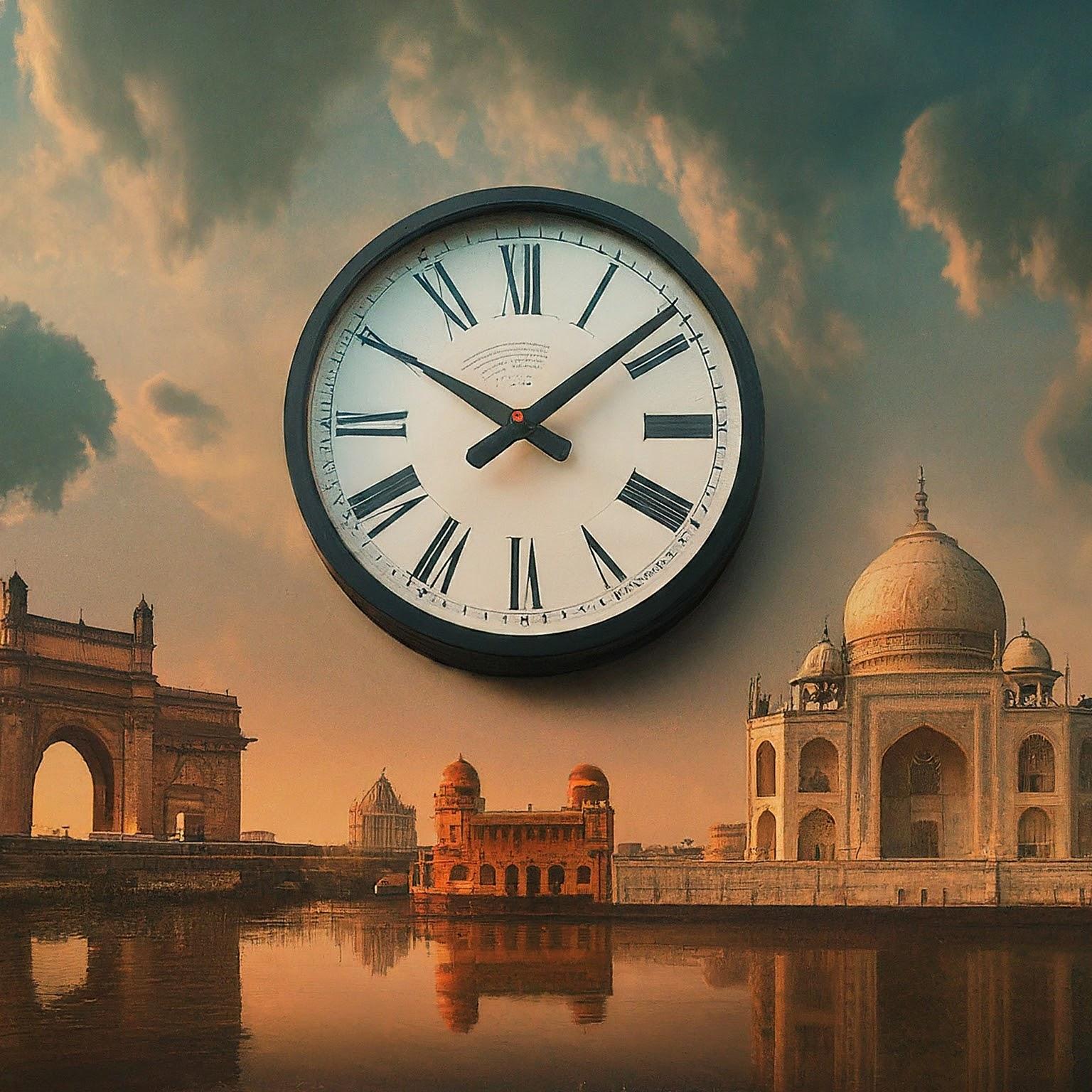
India operates on a single time zone, Indian Standard Time (IST), across all its states and union territories. This simplifies planning, as you won’t need to adjust your watch when traveling from Delhi to Kerala or Mumbai to Kolkata.
India does not observe Daylight Saving Time (DST). This means the time difference with your home country remains consistent year-round, making it easier to coordinate calls or travel plans.
🌍 Your Country |
⏱️ Difference with IST |
🔄 Example |
|---|---|---|
🇺🇸 USA (Eastern Time) |
IST is 9.5 hrs ahead |
12 PM IST = 2:30 AM EST |
🇬🇧 UK (GMT) |
IST is 5.5 hrs ahead |
12 PM IST = 6:30 AM GMT |
🇦🇺 Australia (Sydney) |
IST is 4.5 hrs behind |
12 PM IST = 4:30 PM AEST |
India’s vast size — spanning over 3,000 km east to west — means the single time zone creates some quirks. In the northeastern states like Arunachal Pradesh or Assam, the sun rises and sets much earlier than in western states like Gujarat.
For instance, in winter, the sun may rise in Guwahati around 5:30 AM but not until 6:30 AM in Mumbai. This can affect your travel plans, especially for early-morning activities like trekking in the Northeast or catching a sunrise at the Taj Mahal.
Sun rises/sets earlier. Plan outdoor activities at Kaziranga National Park or Hornbill Festival in Nagaland early in the day.
Later sunrise gives you more morning flexibility to plan your day at a relaxed pace.
If you’re visiting the Northeast, plan outdoor activities early in the day to make the most of daylight. In western or southern India, you’ll have more morning flexibility.
In India, the concept of “IST” is sometimes jokingly referred to as “Indian Stretchable Time” in social or casual settings. A meeting set for 6 PM might start closer to 6:30 PM, and a dinner invite could have a buffer of up to an hour.
Punctuality can be more relaxed outside formal contexts, especially in rural areas or for social gatherings. This reflects India’s vibrant, go-with-the-flow culture, but it can catch travelers off guard.
Embrace this flexibility in casual scenarios, like meeting locals for chai or attending a village festival. However, always clarify expectations for events like guided tours or homestay arrangements, as some hosts may stick to stricter schedules.
While social settings may be relaxed, public transportation and official services in India run on tight schedules. Trains, buses, and domestic flights stick closely to their timetables. Missing a train by even a few minutes can disrupt your plans, especially in remote areas.
🚉 Transport Type |
⏰ Arrive Early By |
📍 Key Locations |
|---|---|---|
✈️ Domestic Flights |
45–60 mins |
All major airports |
🚆 Trains |
30–45 mins |
New Delhi Railway Station, CSMT Mumbai |
🚌 Intercity Buses |
20–30 mins |
State bus depots |
🏛️ Major Hubs |
+1 extra hour |
Crowds, security, ticket counters |
Download these apps to stay on top of schedules and avoid missing your ride:
- Sync Your Devices: Most smartphones automatically adjust to IST when you connect to a local network. Double-check your phone’s time zone settings to avoid confusion, especially for time-sensitive plans like catching a flight or booking a tour.
- Plan Around Traffic: In almost all major cities, traffic can be unpredictable. If you’re heading to an airport or a key attraction like the Gateway of India, leave early to account for delays, especially during peak hours (8–10 AM, 5–8 PM).
- Leverage IST for Multi-City Itineraries: Since IST is uniform, planning multi-city trips (e.g., Delhi to Jaipur to Agra) is straightforward. Use this to your advantage when booking intercity buses or trains via platforms like RedBus or MakeMyTrip.
- Respect Local Schedules: In tourist-heavy areas like Rajasthan or Goa, businesses like restaurants or shops may open later (around 10 AM) and stay open late (10 PM or later). In smaller towns or religious sites like Varanasi, early mornings are busy with rituals and markets.
- Jet Lag Planning: The 5.5-hour time difference can cause mild jet lag, especially if you’re traveling from Europe or the Americas. Arrive a day early for important events like a wedding or business meeting to acclimate.
Understanding IST and its nuances helps you plan a smoother, more enjoyable trip. Whether you’re catching a train to the Himalayas, attending a festival in Rajasthan, or exploring street food in Kolkata, aligning with India’s time culture ensures you don’t miss out.
By factoring in buffers for public transport and embracing the relaxed vibe of social settings, you’ll navigate India like a seasoned traveler.
Be early for trains, flights & buses. Be relaxed for social events & dinners. India rewards travellers who adapt to both rhythms.
The Indian Institute of Astrophysics in Bengaluru maintains the country’s time standard, ensuring IST stays precise. So, when you’re marveling at the stars in Ladakh or enjoying a sunset on a Kerala beach, you’re on the same clock as the rest of India!
Your support helps us keep India Travel Tips free & up-to-date