

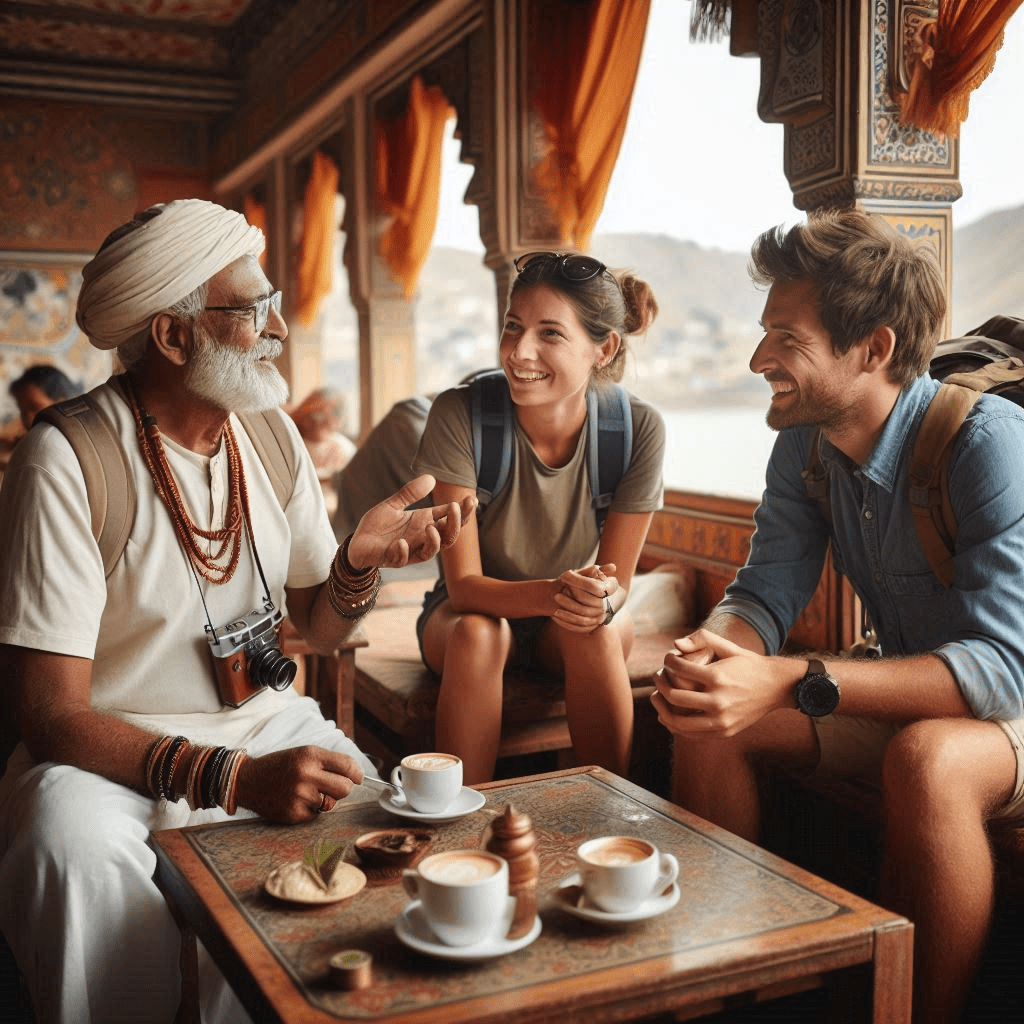
India is a dynamic country with a lively political scene that reflects its diverse culture and history. As a traveler, you might find yourself in conversations about politics, whether with a rickshaw driver, a market vendor, or a fellow tourist. These discussions can be fascinating but require sensitivity due to India’s complex social and political landscape. Here’s a practical guide to help you engage respectfully, gain insights, and enrich your travel experience.
📖 Before You Engage
🌐 Understand the Context
India’s democracy is one of the largest in the world, with passionate debates shaped by its diversity. Political polarization often stems from religious, caste, and linguistic differences. As in many other countries, media in India — including television, newspapers and social platforms — often amplify these divides with biased or paid narratives or misinformation to suit vested interests across the political spectrum. Be prepared for strong and often biased opinions, and approach conversations with an open mind.
Television, newspapers and social platforms often amplify political divides with biased or paid narratives. Treat all political information you encounter — online or in conversation — with healthy scepticism.
👀 Read the Room
Before joining a discussion, gauge the mood. Is it a casual chat over chai at a roadside stall, or a heated debate in a city café? If emotions are running high, it’s often best to listen rather than contribute.
🎯 Know Your Audience
The person you’re talking to matters. Use the table below as a quick reference:
👤 Who You’re Talking To |
💡 What They Likely Share |
🧭 Your Approach |
|---|---|---|
🚕 Taxi / Rickshaw Driver |
Local street-level insights, traffic policies, fuel prices |
Ask about day-to-day impacts; keep it light |
🛒 Market Vendor / Shopkeeper |
Economic policies, GST, business regulations affecting them |
Ask how government policies affect their trade |
✈️ Fellow Tourist |
Broader perspective, outsider observations |
Good for open discussion; less local context |
🎓 Educated Urban Professional |
National politics, social media narratives |
More nuanced but possibly polarised; listen carefully |
💬 During the Discussion
Focus on Common Ground
Steer conversations toward neutral topics like India’s economic growth, its vibrant festivals, or the role of democracy in shaping its future. For example, ask about how recent elections have impacted local infrastructure or tourism in the area you’re visiting.
Listen Actively
Show genuine curiosity by asking open-ended questions. Indians are often eager to share their perspectives, and listening respectfully can lead to deeper cultural insights. Asking a vendor how government policies affect their business can reveal real-world impacts of politics.
Stay Respectful
Avoid judgmental tones, sarcasm, or criticism of political figures or parties, even if you disagree. Political loyalties in India can run deep, and offhand remarks might offend unintentionally.
✅ ❌ Quick Dos & Don’ts
✅ DO |
❌ DON’T |
|---|---|
Ask open-ended questions about local life |
Criticise specific political leaders or parties |
Listen more than you speak |
Share strong opinions on India’s internal affairs |
Celebrate India’s democratic scale and diversity |
Use sarcasm or a judgmental tone |
Redirect to culture, food or festivals if it gets heated |
Compare India unfavourably to your home country |
Show genuine curiosity about how policies affect daily life |
Debate online with strangers on X (Twitter) or other platforms |
⚠️ Topics to Approach with Caution
The topics below are deeply personal and divisive in India. As an outsider, you lack the lived context to navigate these safely — even well-intentioned comments can cause serious offence.
Religious or Caste-Based Politics
Religion and caste are deeply personal and divisive in India. Discussions about these can quickly become heated or misinterpreted, especially for outsiders. Avoid commenting on policies tied to religious communities or caste-based reservations unless you’re well-versed in their nuances.
Historical Controversies
India’s history — from colonial times to the partition of 1947 — is rich but contentious. Events like the Babri Masjid demolition or Emergency period (1975–77) remain sensitive. If these come up, listen politely but avoid taking sides.
Regional Tensions
India’s diversity means regional identities (e.g., South India vs. North India, or Northeast vs. mainland) are strong. Avoid comparing regions or favouring one over another — this can alienate people. Celebrate the unique aspects of each place.
💡 Practical Tips for Travelers
As a visitor, your role is to learn, not debate. Avoid getting drawn into arguments, even if you’re knowledgeable about Indian politics. A respectful nod and a smile can keep things friendly.
🌟 Highlight the Positive
Focus on what makes India’s democracy unique: its scale (over 900 million voters), its diversity, or its resilience.
🚪 It’s Okay to Step Back
If a conversation feels too intense or you’re unsure how to respond, politely excuse yourself with one of these phrases:
- This is really interesting, but I’d love to hear more about [local culture / food / sights].
- I’m still learning about India — I wouldn’t want to say something uninformed!
- That’s a big topic! What do you recommend I visit nearby?
🗺️ Leverage Local Insights
Political discussions can offer a window into India’s soul. Use the examples below to spark meaningful conversations:
Rajasthan
A conversation here might reveal how water scarcity shapes voting patterns and which parties locals trust with resource management.
Kolkata
You might learn about the long legacy of leftist politics and how it shaped the city’s culture, unions, and intellectual identity.
Bengaluru
Tech workers may discuss how start-up and IT policies — at both state and central level — affect their industry and job prospects.
📱 Respect Digital Spaces
If you’re engaging with locals on platforms like X (Twitter), be cautious. Political posts can attract strong reactions, and misinformation is very common. Stick to asking questions or sharing positive travel experiences rather than debating online.
❤️ Why This Matters for Travelers
Engaging in political conversations — when done thoughtfully — can deepen your understanding of India’s culture and challenges. Use the examples below to see how politics connects directly to your travel experience:
Rural Development Chat
A conversation about rural development might explain why some villages you visit lack reliable electricity — connecting policy decisions to the real landscape you’re seeing.
Tourism Policy Discussion
A discussion about tourism policies could clarify why certain monuments charge higher entry fees for foreign visitors — a common point of curiosity for tourists.
Human Connection
These insights make your journey more meaningful and help you connect with locals on a human level — beyond just sightseeing.
Thoughtful political conversations — led by curiosity, not opinion — are one of the best ways to truly understand the country you’re visiting. India rewards the respectful traveler with extraordinary depth.
Your support helps us keep India Travel Tips free & up-to-date