

🌏 India’s cultural diversity shines through in its greetings, each reflecting the warmth and traditions of its people. From the universal “Namaste” to regional phrases, here’s your guide to greeting people across India, with practical tips to make your trip more immersive.
🙏 Universal Greeting: Namaste
“Namaste” (NAH-mah-stay) means “the divine in me bows to the divine in you.” It’s a respectful, all-purpose greeting used across India.
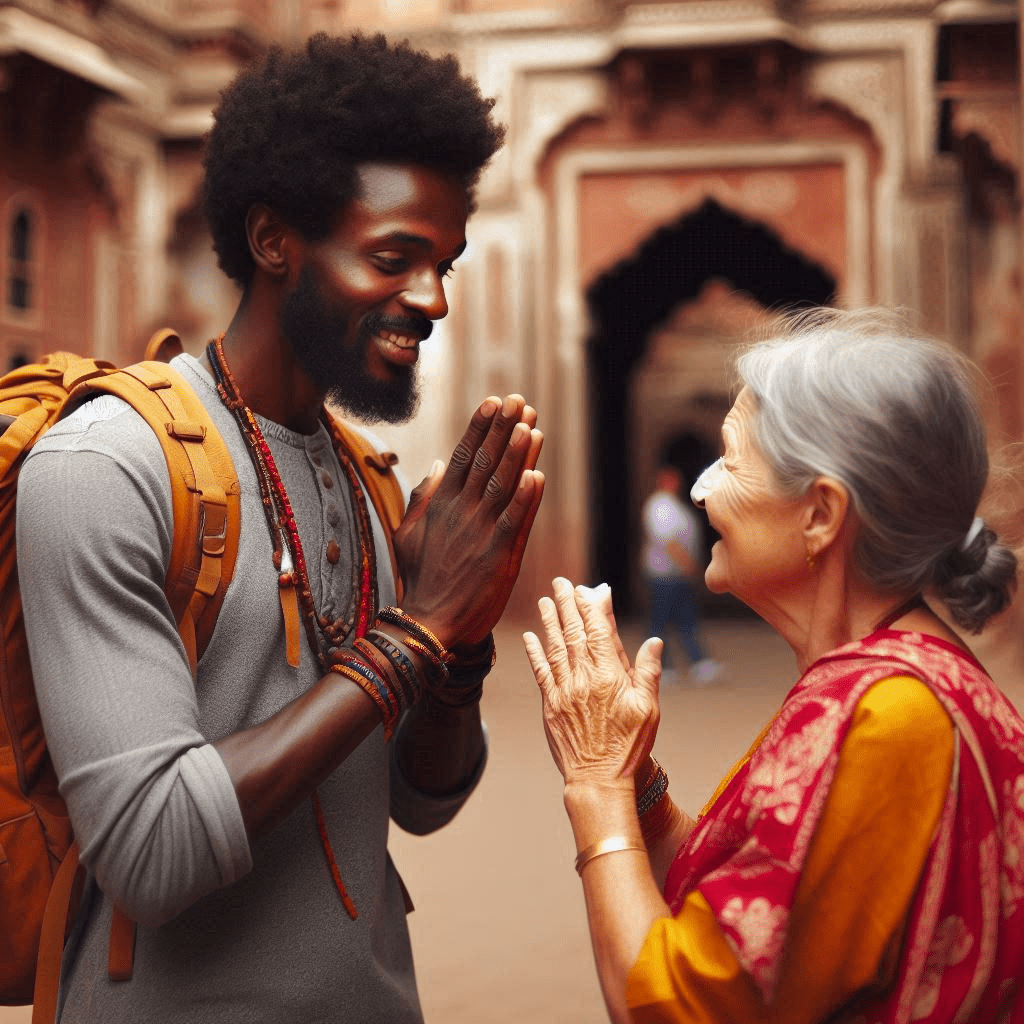
Press your palms together at chest level, fingers pointing up, and give a slight bow. Pair it with a smile for warmth.
Works in most settings — formal or casual, with strangers or friends. It’s a safe bet if you’re unsure of local customs.
Widely understood even in remote areas, making it perfect for first-time travelers. Use it in hotels, shops, or when meeting locals.
🗺️ Regional Greetings: A State-by-State Guide
India’s regions have distinct greetings that reflect their languages and traditions. Using these shows cultural sensitivity and can spark friendly conversations. Below is a breakdown of key greetings by region, with pronunciation and context.
Region |
Greeting |
Pronunciation |
Meaning / Context |
Best Used In |
|---|---|---|---|---|
🌴 South India |
Vanakkam |
Vah-nahk-kam |
Respectful hello in Tamil Nadu; similar to Namaste. |
Chennai, Madurai, Tamil Nadu |
🌴 South India |
Namaskara / Namaskaram |
Nah-mas-kara / karam |
Variants of Namaste used in Karnataka, Kerala, Andhra Pradesh, and Telangana. |
Bengaluru, Kochi, Hyderabad |
🏜️ West India |
Khamma Ghani |
Khah-mah Ghah-ni |
“Respectful bow” in Marwari, common in Rajasthan. Warm and welcoming. |
Jaipur, Udaipur, Jodhpur |
🏜️ West India |
Jai Jinendra |
Jai Jhee-nen-dra |
Jain greeting meaning “victory to the conqueror (of inner enemies).” |
Gujarat, Rajasthan (Jain communities) |
❄️ North India |
Sat Sri Akal |
Saht Sree Ah-kal |
Sikh greeting meaning “Truth is eternal.” Common in Punjab. |
Amritsar, Chandigarh, Delhi |
❄️ North India |
Ram Ram |
Raam Raam |
Hindu greeting, especially among Vaishnavas (Vishnu devotees) in North India. |
Uttar Pradesh, Haryana, Rajasthan |
🌿 East India |
Shubho Din |
Shuh-bo Din |
Bengali for “auspicious day.” A warm, friendly greeting. |
Kolkata, West Bengal |
🌿 East India |
Nomoskar / Nomoshte |
No-mos-kar / No-moshte |
Bengali/Assamese version of Namaste, used in casual or formal settings. |
West Bengal, Assam |
🏔️ North East |
Areh |
Ah-reh |
Casual Naga greeting, like “hey” or “hello.” |
Nagaland |
🏔️ North East |
Julley |
Joo-lay |
Adi greeting in Arunachal Pradesh, meaning “hello” or “welcome.” |
Arunachal Pradesh |
🏔️ North East |
Rozal |
Ro-zal |
Friendly Mizo greeting for “hello.” |
Mizoram |
🏔️ North East |
Khurumjari |
Khoo-room-jari |
Manipuri greeting meaning “My obeisance to you.” |
Manipur |
🏔️ North East |
Gaymei Lauthwan |
Gay-may Law-thwan |
Rongmei (Manipur) for “Good morning.” Varies by time of day. |
Manipur (morning interactions) |
☪️ Muslim Communities |
As-salamu Alaikum |
Ah-sah-laam-u-alai-kum |
“Peace be upon you.” Respond with “Wa Alaikum Assalam.” |
Across India, especially Hyderabad, Lucknow |
☪️ N. India (Urdu) |
Adaab |
Ah-daab |
Respectful greeting with a hand gesture on the chest, used by Muslims and others. |
Delhi, Lucknow, Uttar Pradesh |
💡 Insights for Travelers
The North East is a linguistic treasure trove with over 200 languages. For example, Nagaland alone has 16 major tribes, each with unique greetings. If you’re trekking in Arunachal or visiting Aizawl, learning “Julley” or “Rozal” can make locals smile.
Greetings like “Jai Jinendra” (Jain) or “Sat Sri Akal” (Sikh) are tied to specific communities. Use them when visiting religious sites like Jain temples in Gujarat or the Golden Temple in Amritsar.
In cities like Delhi or Mumbai, “Hello” or “Namaste” is common. In rural areas, regional greetings like “Ram Ram” (Haryana) or “Vanakkam” (Tamil Nadu) are more appreciated.
❤️ Why Greetings Matter for Travelers
Build Connections
A simple “Vanakkam” in Tamil Nadu or “Sat Sri Akal” in Punjab can turn a transaction into a conversation. Locals may share tips, invite you for tea, or even show you hidden gems.
Show Respect
Using regional greetings signals you value India’s diversity. This is especially impactful in smaller towns or tribal areas, where tourists are less common.
Cultural Immersion
Greetings are a window into India’s traditions. “Khamma Ghani” reflects Rajasthan’s hospitality, while “As-salamu Alaikum” connects to India’s Islamic heritage.
You don’t need to greet every person you pass. Reserve greetings for meaningful interactions, like meeting a shopkeeper, guide, or host. Over-greeting can feel awkward in busy urban settings like Mumbai or Bengaluru.
When greeting older people, add a slight bow or tilt your head to show respect. This is especially important in traditional settings, like meeting a family in a village homestay.
“Namaste” is a safe fallback, but using a regional greeting like “Vanakkam” in Chennai or “Khamma Ghani” in Jaipur shows you’ve done your homework. Locals often appreciate the effort.
A genuine smile bridges language gaps. Even if you mispronounce a greeting, a warm expression makes up for it.
On calls, stick to “Hello” or “Good morning/afternoon/evening” unless you know the person’s language. For example, in Kolkata, you might hear “Shubho Din” on the phone.
Mispronouncing greetings can lead to confusion. Practice with locals or use language apps like Duolingo to get the tone right.
In some regions, like Manipur, greetings change based on the time of day (e.g., “Gaymei Lauthwan” for morning). Ask your guide or host for time-specific phrases.
🎁 Bonus Tips for Travelers
Pair greetings with appropriate gestures. For “Adaab,” place your right hand on your chest. For “Namaste,” keep your palms pressed firmly together.
During festivals like Diwali (North India) or Pongal (Tamil Nadu), greetings take on extra meaning. Learn phrases like “Shubho Deepavali” (Happy Diwali) or “Pongal Vazhthukal” (Pongal greetings) to join the celebrations.
Download apps like Google Translate or Babbel to practice greetings before your trip. Many have audio features to nail pronunciation.
If you’re unsure of a greeting, ask your hotel staff or guide. They’ll often teach you local phrases with enthusiasm.
Your support helps us keep India Travel Tips free & up-to-date