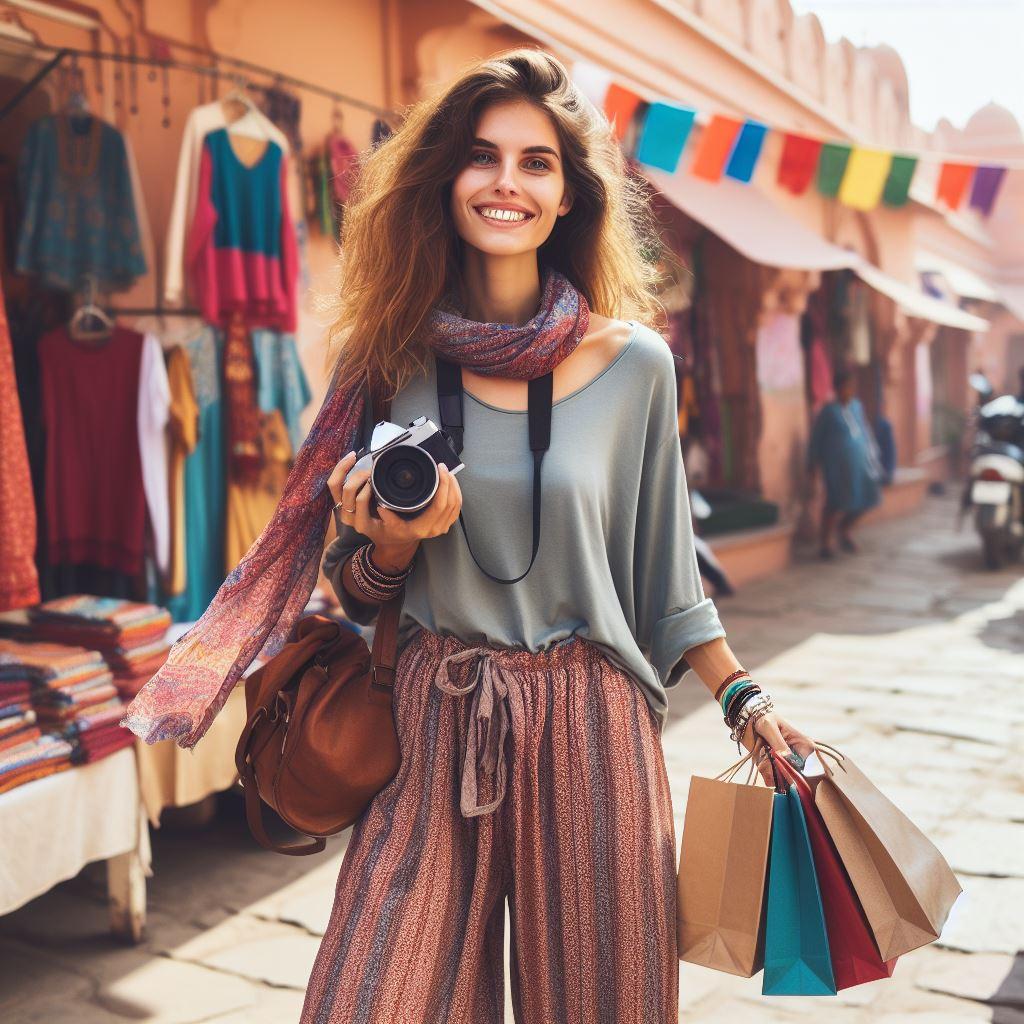
India can be hot and humid, bitterly cold or soaking wet depending on where and when you travel, and dress norms change from one region, and even one neighbourhood, to the next. Dress well and you’ll stay comfortable, get into the places you want to see, and often get warmer reactions from the people you meet. Dress carelessly and the worst outcome is usually discomfort or being turned away at a religious site. This guide covers the rules that matter, the exceptions, and what to pack by season.
The short version
- Pack loose, breathable clothes that cover shoulders and knees. They work almost everywhere, in the heat, and at religious sites.
- Norms vary far more by region and neighbourhood than a single rule suggests. Use the regional guide below.
- Religious sites have the strictest rules, and they apply to men as well as women.
- Always carry a scarf or light shawl. It covers your head, shoulders and arms, and it doubles as a layer against freezing air conditioning.
- Check the official dress code of any major temple, mosque or gurdwara before you go. Some require traditional dress, and some restrict non-Hindu or non-Muslim visitors.
How strict is it where you’re going?
A single national rule doesn’t work. Use this as a rough guide, and watch what local people of your age are wearing.
Level | Typical places | What’s usually fine |
|---|---|---|
Relaxed | Goa | Shorts, skirts, dresses and sleeveless tops, so long as they aren’t very revealing |
Moderate | Mumbai, Bengaluru, Pondicherry, Delhi (including upscale parts and Gurgaon), Hyderabad, Chennai, Kolkata, Kerala away from tourist beaches, Rishikesh, tourist towns in Rajasthan and Himachal, hotel and resort areas | Knee-length shorts or skirts, T-shirts or tops with sleeves; skip very short or low-cut clothing |
Conservative | Villages and small towns anywhere, rural Rajasthan, Uttar Pradesh, Bihar, Punjab countryside, Kashmir, pilgrimage towns such as Varanasi, Haridwar, Pushkar and Vrindavan | Loose clothing covering shoulders and knees or more; kurtas, long skirts or trousers |
Within one city the level can change by neighbourhood. South Mumbai or Koramangala in Bengaluru is a very different setting from an old-city market or a pilgrimage ghat. When in doubt, dress for the most conservative place you’ll visit that day.
Everyday principles
Fabric and fit. Choose loose cotton, linen or viscose that dries quickly and lets air move. Synthetics like polyester trap heat and sweat in humidity, though quick-dry synthetics are fine for trekking. Loose clothes also protect you from the sun better than skimpy ones.
Footwear. Pick shoes or sandals that slip on and off easily, because you’ll remove them at temples, mosques, some shops and many homes (see our footwear etiquette guide). Carry a pair of socks for hot or dirty floors.
Sun protection. Bring a hat, sunglasses and sunscreen for every trip, not only treks. Use SPF 30+ daily, and SPF 50+ at the beach or at altitude, where UV is stronger.
A layer for the air conditioning. Trains, buses, cinemas, malls and flights are often very cold. A light cardigan, shawl or long-sleeved shirt in your day bag is one of the most useful things you can carry, even in summer.
Laundry is cheap. Hotels and local laundries return clothes within a day or two for very little, so you can pack for 4–5 days rather than the whole trip.
What colour actually matters
Colour guidance is often exaggerated, so here is what holds up:
- For everyday wear and sightseeing, almost any colour is fine. Light colours reflect heat. White cotton is common summer wear in India, so there is no need to avoid it day to day.
- At weddings and celebrations, avoid white and, in many communities, black, since both can be associated with mourning. Practice varies by region and family, so if you have a host, ask.
- As a wedding guest, don’t wear bridal red or anything that competes with the bride. Pastels, yellows, greens, pinks, oranges and jewel tones are safe choices.
- At funerals, white is the usual colour of mourning in many Hindu communities.
- At Holi, white is traditional because it shows the colour. See the festivals section below.
- In markets and villages, bright colours won’t cause offence. Muted clothing just helps you blend in if you want less attention.
Religious imagery on clothing
Avoid clothing, bags, footwear or swimwear printed with Om symbols, Hindu deities, Buddha images or other sacred imagery. Many people find it disrespectful, particularly on shoes, leggings or anywhere below the waist. Slogans that mock religion or politics are also best left at home.
What women should wear day to day
- Outside relaxed areas, choose tops that cover shoulders and avoid deep necklines.
- Skirts and dresses should reach the knee or below in moderate and conservative areas. Loose trousers, long skirts, kurtas and palazzo pants are comfortable and widely accepted.
- Light cotton kurtas with leggings or loose trousers are the easiest all-round option, and they’re cheap to buy on arrival.
- A dupatta or scarf is useful for sun, religious sites and cold air conditioning.
What men should wear day to day
Men face fewer rules but not none.
- Long trousers or knee-length shorts are fine in cities. In conservative areas and at religious sites, wear long trousers.
- Wear a shirt or T-shirt with sleeves. Sleeveless vests are fine at the gym or beach but look out of place on the street, and going shirtless away from a beach is never appropriate.
- At religious sites, cover shoulders and knees, remove caps, and be ready to wear a mundu or dhoti or go bare-chested at certain Kerala temples (see below).
- For weddings and formal occasions, a kurta or a collared shirt with trousers is a good choice.
A note on harassment and safety
Dressing modestly shows respect and can reduce unwanted attention, but it doesn’t prevent harassment, and harassment is never the fault of the person who experiences it. Women travellers, solo and in groups, report unwanted staring, comments and touching in some places whatever they wear. Practical steps that help:
- Trust your instincts and move away from situations that feel wrong.
- Use ride-hailing apps or prepaid taxis, especially at night, and share your route with someone.
- Avoid empty streets after dark in unfamiliar areas.
- Know the numbers: 112 is the national emergency number, and 1363 is the Ministry of Tourism’s 24×7 tourist helpline.
Religious sites
Religious places enforce dress codes most strictly, and you can be refused entry. Rules vary by site, so check the official website or signs at the entrance.
Rules that apply almost everywhere
- Cover shoulders, chest and knees. Men and women both.
- Remove shoes before entering, and leave them at the designated counter or outside.
- Carry a scarf or dupatta. It’s required for head covering in many places.
- Avoid tight, sheer or sleeveless clothing.
- Ask before photographing people at worship, and respect “no photography” signs.
By faith
Hindu and Jain temples. Most ask for modest dress with shoulders and knees covered. Many Jain temples, and some Hindu ones, don’t allow leather items such as belts, wallets or bags inside, so leave them in your hotel or at the cloakroom. Several well-known temples in Kerala, including Padmanabhaswamy in Thiruvananthapuram and Guruvayur, require men to wear a mundu or dhoti and go without a shirt, and women to wear a saree or traditional dress. Some, including these two, admit only Hindus, as do Puri’s Jagannath Temple and a few others. Check before you plan around them.
Sikh gurdwaras. Everyone, men and women, must cover their heads and remove shoes. Free head coverings are provided at the entrance of major gurdwaras such as the Golden Temple, though bringing your own saves time. Alcohol and tobacco are not allowed on the premises.
Mosques and dargahs. Women should cover arms, legs and hair, with loose clothing that doesn’t show the body’s shape. Men should wear long trousers and covered shoulders, with no shorts. Some large mosques, such as Jama Masjid in Delhi, lend or rent cover-up robes at the gate if you’re underdressed, and may restrict entry at prayer times.
Churches. Dress modestly, with shoulders and knees covered. Popular Goa churches such as the Basilica of Bom Jesus ask visitors not to wear beachwear.
Buddhist monasteries. Dress modestly, remove hats and shoes inside, and avoid pointing your feet at statues. Do not wear clothing printed with Buddha imagery.
Examples of well-known sites
Site | What to expect |
|---|---|
Golden Temple, Amritsar | Head covering for everyone; shoes off; free head scarves available |
Padmanabhaswamy Temple, Thiruvananthapuram | Traditional dress required (mundu for men, saree or similar for women); Hindus only |
Jama Masjid, Delhi | Shoulders and legs covered; cover-up robes available at the gate |
Akshardham, Delhi | Modest dress and strict security checks |
Taj Mahal, Agra | No formal dress code, but modest dress is wise; shoe covers needed for the main mausoleum |
Basilica of Bom Jesus, Goa | Modest dress; no beachwear |
Rules change, so confirm on the official website before you travel.
Beaches and swimwear
Beach norms vary enormously across India, and even within one state.
- Tourist beaches in North and South Goa, Palolem, Kovalam, Varkala, Gokarna’s Om and Kudle beaches, Pondicherry’s tourist stretches and Havelock Island in the Andamans are used to swimwear. Bikinis and swim shorts are common, though topless and nude bathing is not allowed.
- Local beaches in places like Puri, Juhu in Mumbai, Chennai’s Marina and many Kerala town beaches are popular with Indian families, who often swim fully clothed. Wear shorts and a T-shirt, or a rash guard and leggings, to avoid attention.
- Lakshadweep and some other islands have stricter norms and permit requirements. Check locally.
- Whatever the beach, cover up with a sarong, kaftan or T-shirt when you leave the sand, and don’t walk through town in swimwear.
Cities, markets and villages
- Cities: use the regional guide above. In relaxed cities, Western clothes are common. Elsewhere, knee-length bottoms and sleeved tops are safer.
- Markets and old city areas: wear light, loose clothing that covers shoulders and knees, closed-toe shoes for uneven, dusty ground, and a cross-body bag or backpack for hands-free carrying. Choose clothes with a zipped or inner pocket for valuables.
- Villages: dress more conservatively. Wearing a kurta or salwar kameez is usually welcomed and can lead to friendlier interactions. Ask permission before photographing people, and don’t treat them as photo props.
- Shopping tip: bring a reusable cloth bag, since plastic bag bans are common in many states.
Hotels, bars and nightlife
Five-star hotels, resorts, upscale restaurants, pubs and clubs in major cities generally accept casual resort and Western wear. In pools and resort areas, normal swimwear is fine. Dress codes at clubs may require closed shoes, no shorts or no sandals for men, so check ahead. Cover up when you leave the property for the street.
Weddings and festivals
If you’re invited to a wedding or festival, dressing up is a sign of respect and part of the fun.
- Women: a saree, salwar kameez, lehenga or anarkali. Modest, elegant Western dresses also work.
- Men: a kurta (with churidar or pyjama), a bandhgala or Nehru jacket, or a suit. Sherwanis are usually worn by the groom and close family, so guests often choose a kurta instead.
- Accessories: keep jewellery, bangles and flowers tasteful. Ask before wearing a bindi or other religious marks.
- Colour: see the colour section above. Follow the invitation and ask your host if you are unsure.
- Sikh weddings and gurdwara ceremonies: everyone covers their head.
Holi
Holi, usually in March, involves being covered in coloured powder and water. Wear old clothes you won’t mind ruining, with white a traditional choice. Oil your hair and skin beforehand, wear sunglasses, and protect your phone with a waterproof pouch. Crowded Holi celebrations can lead to unwelcome touching, so celebrate in a group or a hotel or organised event if you are unsure.
Buying ethnic wear
Markets such as Chandni Chowk in Delhi and Colaba in Mumbai sell affordable ethnic wear, and local tailors can adjust it quickly. Shops such as FabIndia offer fixed prices.
Safaris, ashrams and treks
Wildlife safaris
Wear muted greens, khakis and browns, and avoid bright colours and strong scents. Open jeeps are cold at dawn, particularly in winter in places like Ranthambore or Corbett, so bring a warm layer, scarf and hat. Closed shoes and long sleeves help against dust and insects.
Yoga retreats and ashrams
Ashrams usually ask for modest, loose clothing, often light colours, and some require specific dress for ceremonies. Check the rules when you book.
Hiking and trekking
From Himalayan treks to the Western Ghats, dress for changing weather.
- Layer a base layer, fleece and windproof or waterproof jacket.
- Choose breathable, quick-drying fabrics.
- Wear sturdy, broken-in hiking shoes with good grip.
- Carry a hat, sunglasses, SPF 50+ sunscreen, insect repellent and a reusable water bottle.
- In high-altitude areas like Ladakh and Spiti, bring thermal underwear, since nights are cold even in summer.
Weather, seasons and health
What to pack by season
Season | What it’s like | Pack |
|---|---|---|
Winter (November–February) | North India is cold: Delhi nights can fall to around 5°C, hill stations like Manali and Shimla hover near or below freezing, and Leh and Spiti can drop to −10°C or lower. The South and coasts stay warm. | Thermals, fleece, down jacket, hat, gloves and scarf for the north; light clothes for the south |
Summer (March–June) | Very hot across most of the country, often above 40°C in the plains | Light cotton, hat, sunglasses, sunscreen; light layers for the hills |
Monsoon (June–September) | Heavy, sudden rain, high humidity | Quick-dry clothing, a light rain jacket, waterproof bag cover |
Monsoon footwear
Leave leather and suede shoes at home. Choose sandals with grips or quick-drying shoes, because flip-flops are slippery on wet pavements and flooded streets.
Mosquito protection
Dengue-carrying mosquitoes bite during the day, while malaria-carrying mosquitoes bite from dusk to dawn, so protection is needed all day in affected areas. Wear long sleeves and trousers when you can, use an effective repellent, and consider permethrin-treated clothing. Ask a travel clinic about vaccines and medicines before you go.
Altitude
Clothing won’t prevent altitude sickness. Acclimatise gradually, drink water, and read our health guide before trekking above 3,000 metres. At altitude, UV is stronger, so cover up and use sunscreen.
Quick reference: what to wear where
Setting | Women | Men | Head cover | Key note |
|---|---|---|---|---|
Hindu and Jain temples | Covered shoulders and knees | Covered shoulders and knees (some Kerala temples: mundu, no shirt) | Not usually | Remove shoes; no leather items at many sites |
Gurdwaras | Covered shoulders and knees | Covered shoulders and knees | Required for all | Free head scarves at major sites |
Mosques and dargahs | Cover arms, legs and hair | Long trousers, covered shoulders | Women: yes | Robes sometimes available at the gate |
Churches and monasteries | Modest, covered shoulders and knees | Modest; remove hats | No | No beachwear |
Villages and conservative areas | Long, loose clothing | Long trousers, sleeved shirts | Optional | Blend in; muted clothing helps |
City streets and markets | Knee-length or longer in moderate areas | Trousers or knee-length shorts | Optional | Follow the regional guide |
Relaxed cities and nightlife | Western clothing is normal | Western clothing is normal | No | Check venue dress codes |
Tourist beaches | Swimwear on the beach | Swim shorts on the beach | No | Cover up off the sand |
Local beaches | Shorts and T-shirt or rash guard | Shorts and T-shirt | No | Swim clothed |
Resorts and 5-star hotels | Resort wear, swimwear at the pool | Resort wear, swimwear at the pool | No | Cover up outside the property |
Weddings and festivals | Ethnic wear or modest dress | Kurta or suit | Sikh ceremonies: yes | Avoid white, black and bridal red at Hindu celebrations |
Safari | Muted colours, layers | Muted colours, layers | Hat and scarf | Cold at dawn |
Trekking | Layers, thermals at altitude | Layers, thermals at altitude | Hat or beanie | UV protection |
Packing checklist
Clothing
- 4–5 loose cotton or linen tops, with sleeves
- 2–3 pairs of loose trousers, long skirts or knee-length shorts
- 1–2 kurtas, which are easy to buy on arrival
- A large scarf or shawl for sun, head cover and cold AC
- A light cardigan or long-sleeved shirt
- Swimwear, plus a cover-up or sarong
- Rain jacket in monsoon; warm layers and thermals in the north in winter
Footwear
- Easy slip-on shoes or sandals
- Closed-toe walking shoes
- Socks for temple floors
- Grippy sandals for monsoon
- Hiking boots if trekking
Extras
- Hat, sunglasses and sunscreen
- Insect repellent
- Cross-body bag or backpack
- Reusable cloth bag
- Waterproof pouch for phone, especially for Holi or monsoon
Final thoughts
Dressing thoughtfully in India makes you more comfortable, helps you get in the doors you want to enter, and opens the way to friendlier conversations. You don’t need a special wardrobe. Pack light, breathable and modest clothes, carry a scarf, check the rules for the big religious sites, and buy local clothes on arrival, since they’re cheap and well suited to the climate. Safe travels!