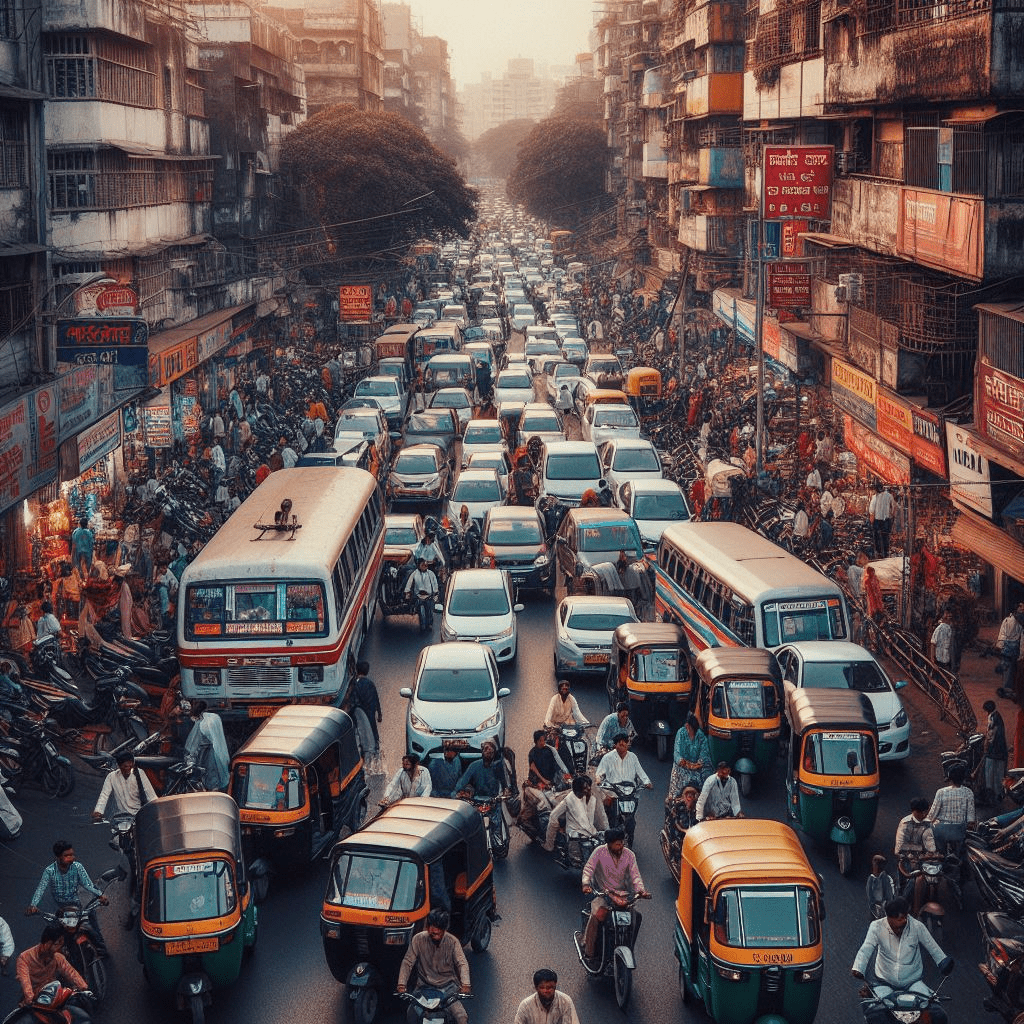
Indian traffic operates like a river—fluid, unpredictable, and guided more by instinct than strict rules. Lane markings and right-of-way are often suggestions rather than mandates. Expect vehicles to merge, weave, and shift seamlessly, creating a unique rhythm.
Honking is a language here, used to signal presence, request space, or alert others — not as aggression. Embrace it as part of the road’s soundtrack.
Buses, trucks, and SUVs often take precedence due to their size. Stay cautious around these vehicles, especially on highways, and be ready to yield when needed. Smaller vehicles like cars or rickshaws adjust to their presence.
Motorcycles, scooters, and mopeds are everywhere, zipping through gaps and weaving through traffic. They’re nimble and quick, so always check your surroundings, especially at intersections or in city traffic.
Road Risks to Watch ForSome drivers may skip traffic signals, especially in less regulated areas. Overloaded motorcycles carrying families or goods are common, and their balance can be unpredictable. Drunk driving, though less frequent, remains a risk, particularly at night. Stay vigilant, especially in rural or suburban areas.
Auto-Rickshaws and Cycle RickshawsAuto-rickshaws (three-wheeled taxis) and cycle rickshaws are staples in Indian cities. They’re affordable and great for short trips but can be slow and may dart unexpectedly. If you’re riding in one, ensure the driver agrees on a fare or uses a meter to avoid overcharging.
Road Type |
Condition |
What to Expect |
|---|---|---|
Good |
Well-maintained, smooth surfaces. Good for long-distance travel. |
|
🏘️ Smaller / Rural Roads |
Mixed |
Potholes, uneven patches, or gravel common. Night driving challenging due to poor lighting — travel by daylight if possible. |
🌆 City Roads |
Busy |
Few footpaths. Street vendors, cyclists, and pedestrians share the road. Expect slow movement in dense areas. |
🐄 Rural / Town Roads |
Unpredictable |
Animals (cows, buffaloes, dogs, goats) may wander onto roads. Slow down and navigate patiently — avoid sudden manoeuvres. |
Monsoon Challenges (June–September)If traveling during the monsoon, expect waterlogged roads. Potholes may be hidden under water, so reduce speed and follow local vehicles for cues on safe routes.
Animals on the RoadCows, buffaloes, dogs, and even goats may wander onto roads, especially in rural areas or smaller towns. They’re considered sacred or part of daily life, so drivers typically slow down or navigate around them. Be patient and avoid sudden maneuvers.
India’s major cities rank among the world’s most congested. Rapid urbanisation, a booming population, and rising vehicle ownership mean traffic jams are common, especially during peak hours.
Stuck in a Jam? Embrace It!If you’re stuck in a jam, you’re experiencing a quintessential part of Indian city life. Use this time to observe the street culture — vendors selling snacks, kids waving from rickshaws, or colourful billboards. Plan your itinerary with buffer time to avoid frustration.
Region |
Traffic Level |
Notes |
|---|---|---|
🏙️ Delhi, Mumbai |
Intense |
Some of the worst urban congestion in Asia. Use metro whenever possible. |
🌆 Jaipur, Kochi |
Moderate |
Lighter but still chaotic. Manageable with planning. |
🛤️ Rajasthan, Kerala Highways |
Low |
Less crowded but watch for tractors, bullock carts, and livestock. |
-
😌
Stay Calm and Patient
Indian roads can feel overwhelming, but patience is your best ally. The chaos has an underlying order, and locals navigate it daily. Take a deep breath, go with the flow, and avoid reacting to minor road surprises. -
🛡️
Drive Defensively
Always anticipate sudden moves — whether it’s a motorbike cutting in, a pedestrian crossing, or a vehicle overtaking. Keep a safe distance from other vehicles and use mirrors frequently. -
⏱️
Plan for Delays
Traffic can double travel time, especially in cities. A 10 km trip in Delhi or Mumbai might take 30–60 minutes during peak hours. Use Google Maps for real-time traffic updates, but add extra time to your schedule. -
🧑✈️
Hire a Local Driver
For first-time visitors, driving in India can be daunting. Hiring a local driver — available through travel agencies or apps like Uber, Ola, or local taxi services — is a smart choice. They know the roads, understand traffic patterns, and can handle negotiations at tolls or checkpoints. Expect to pay ₹1,500–3,000 per day for a private car with a driver, depending on the city and car type. -
🕐
Avoid Peak Hours
Morning (8–11 AM) and evening (5–9 PM) rush hours are the busiest. If possible, schedule travel outside these times. Midday or late evenings often have lighter traffic. -
🚇
Use Public Transport
In major cities, consider metros for faster travel. For example, Delhi Metro is efficient, affordable (₹10–60 per ride), and avoids road congestion entirely. Buses are cheaper but can be crowded and less predictable.
Navigation Apps & Local KnowledgeGoogle Maps works well in India but may not capture real-time road closures or festivals causing traffic. Ask locals or your driver for updates on routes, especially during events like Diwali or Holi, when roads may be blocked for celebrations.
If embarking on a road trip (e.g., Delhi to Agra or Mumbai to Goa), make sure you carry these:
Night Driving WarningAvoid driving at night on smaller roads and in rural areas. Poor street lighting, unmarked potholes, and drunk driving risks make night travel considerably more dangerous. Plan to reach your destination before dark whenever possible.
🌅 Embrace the Experience
Indian roads are more than a means to an end — they’re a window into the country’s soul. From the colourful chaos of city streets to the serene highways flanked by mustard fields or coconut groves, every journey tells a story. You’ll see kids waving from school buses, chai stalls buzzing with locals, and maybe even a wedding procession crossing the road. Stay alert, plan smart, and let India’s roads lead you to unforgettable adventures. 🇮🇳