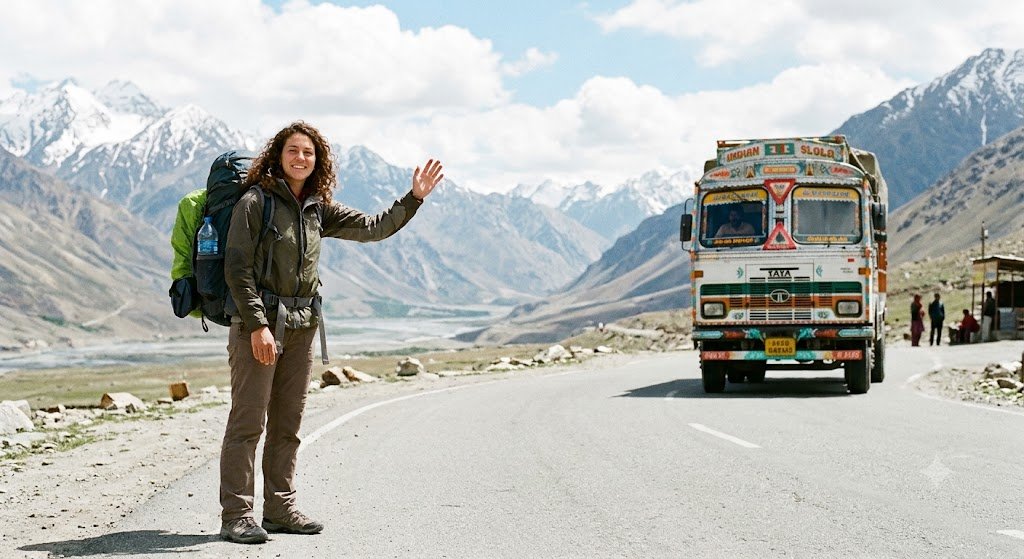
🚗 Hitchhiking in India lets you move cheaply across varied landscapes while meeting locals and seeing places public transport often skips. It is less common than in Europe or North America, and many Indians view it as unusual or confuse it with asking for money. Still, foreigners—especially those who look like tourists—often get rides faster because of curiosity and hospitality. This guide keeps every point from recent traveler reports and adds practical details so you can decide if it fits your trip and do it more safely.
⚖️Is Hitchhiking Legal and Safe?
Hitchhiking is not illegal in India. There is no specific ban, though standing on busy highways or causing traffic issues can draw police attention. Outside western states like Rajasthan and Gujarat, many locals do not understand the idea and may assume you are begging or looking for paid transport.
Foreign travelers, particularly white ones, usually find it easier. Drivers notice you are a tourist and often stop out of interest or a desire to help. This “tourist privilege” means shorter waits than local hitchhikers typically face. Looking clean and presentable helps a lot—neat tourist clothes signal you are trustworthy and not desperate.
Safety depends on common sense. Progress is slower than in the West because of traffic, road quality, and the need to explain what you want. Men, couples, and groups generally report good experiences. Solo women have also had positive trips but stress trusting instincts, avoiding isolated situations, and noting that cultural norms and occasional opportunism can make it feel riskier than in Europe or North America. India is still one of the better options in South Asia for this style of travel thanks to widespread hospitality, but language barriers, chaotic roads, and regional differences keep it unpredictable. An incident involving a vlogger in Andhra Pradesh (linked to a money dispute rather than hitchhiking itself) is a reminder to stay clear about expectations and avoid misunderstandings, especially in areas with strong language divides.
🛡️Safety Precautions
Stick to daylight hours. Share live location continuously. Carry pepper spray and stay sober. Women often prefer pairs or backup options such as women-only ride apps when available.
Drink bottled water, be selective with street food, and expect more staring than in the West—it is usually curiosity.
For overnight stops, prefer temples, gurdwaras, or verified homestays over wild camping; rural areas can have wildlife and fewer services. If a situation feels off, wait for the next vehicle.
🗺️Best Routes
Northern mountain areas with tourist traffic tend to be easiest. Southern and central routes can take longer but still work with patience. Realistic daily distances are usually 250–400 km at best—far less than the 500–600+ km common on good Western highways—because of two-lane roads, frequent stops, and traffic.
High passes, dramatic valleys, and steady tourist and truck traffic. Rides often come from trucks, shared jeeps, or bikers. Foreigners report relatively quick pickups here. Watch for altitude sickness; plan overnight stops and acclimatize. Related stretches such as Manali–Kasol/Tosh, Rishikesh–Joshimath, or Shimla–Spiti also work well with trekkers and local drivers.
Cooler hills, tea estates, and misty roads. Routes like Munnar–Thekkady see local cars and motorcycles offering lifts. Waits can be longer than in the hills of the north, but hospitality is strong.
Beaches, fishing villages, and seafood stops. Easier near tourist zones with Enfield riders and families. Expect more staring and questions than on quieter Western coastal roads.
Flat desert highways and toll booths make spotting and stopping easier. Drivers often share stories or food. This region feels more accepting of the practice than most urban India.
Skip starting inside big cities such as Delhi or Mumbai. Take a bus or train to the outskirts or a major highway junction first. Toll plazas, fuel stations, highway dhabas, and check posts are the most reliable spots.
🌍How It Differs from Hitchhiking in the West
In Europe, North America, or Australia, drivers often recognize the thumb or sign immediately, roads support higher speeds, and daily distances of 600 km+ are realistic. In India you will spend more time explaining, waits vary widely, and average progress is slower. Motorbikes and trucks are common for short or medium hops; private cars are less frequent.
Waving with an open hand (arm angled, palm down, up-and-down motion) works better than a pure Western thumb—many drivers interpret a thumbs-up as a simple greeting.
The upside is hospitality. Drivers frequently offer chai, food, or even a place to rest. This warmth is stronger than in many more individualistic Western cultures, though some travelers note that a few “begpackers” have strained the goodwill. Expect intense staring, pollution, erratic driving, and curiosity that can feel overwhelming at first.
🎒Essential Tips
Preparation and clear communication matter more here than in places where hitchhiking is routine.
Category | Practical Advice |
|---|---|
🎒 Preparation | Dress clean and neat even in casual tourist clothes—this alone improves success rates. Pack light (35–50 L backpack): water, snacks, torch, basic first-aid, rain poncho, pepper spray, power bank, offline maps, ID, and some cash. A simple cardboard sign in English and Hindi (“Free Lift to [Place]” or “Lift chahiye – Paise nahi”) helps. Learn a few phrases: Lift chahiye (I need a lift), Paise nahi (no money), Dhanyavaad (thank you), Namaste. |
👋 Finding Rides | Hitch only in daylight. Stand where vehicles naturally slow or stop (tolls, petrol pumps, dhabas, check posts). Wave rather than just thumb. Prefer trucks, bikes, or families. State “no money” clearly at the start. Foreigners often wait under 5–10 minutes in good spots because they are obvious tourists. Avoid endless suburban edges—get to the main highway first. |
🚚 On the Road | Share live location with someone you trust. Note or discreetly photograph the vehicle number if it feels useful. Be ready for crowded trucks or short motorcycle hops. Conversation is welcome; Indians often enjoy talking. Accept chai stops when offered—it builds rapport. Be cautious of yellow number plates (commercial taxis). If questions become uncomfortable, redirect politely or get out at the next safe stop. |
🧭 Navigation | Download offline Google Maps or Maps.me. Avoid night travel and city ring roads that can strand you. In cities, use local buses or trains to reach outer highways. Northern routes generally favor longer hauls; southern ones offer strong hospitality but possible language barriers. |
👍Do’s and Don’ts
👍 Do’s
- Dress neatly and modestly—it signals respectability and speeds up rides.
- Explain it as asking for a “free lift” or “walking and asking for help.” Many people do not know the English word “hitchhiking.”
- Travel in pairs or groups when possible, especially if you are a woman.
- Accept offered food, chai, or conversation graciously without taking advantage.
- Use temples or gurdwaras for free or low-cost overnight stays—they are usually clean and safe.
- Follow basic customs: right hand for giving/receiving, remove shoes in homes or religious places, dress appropriately for the region.
🚫 Don’ts
- Hitch at night—poor lighting, fatigue, and fewer options raise risks.
- Rely only on a Western-style thumb or elaborate signs. A clear wave works better.
- Offer or agree to pay private drivers. Clarify “no money” early to avoid taxi misunderstandings.
- Ignore your gut feeling. Poverty can occasionally create opportunism. Avoid isolated spots and keep someone informed of your location.
- Joke about politics, regional rivalries, or sensitive topics—it can end a ride quickly.
🙏Cultural Notes and Etiquette
Hospitality is genuine. Drivers may offer tea, food, or lodging. Accepting a cup of chai is a simple way to connect. Stay humble and polite so the “tourist privilege” does not turn into entitlement.
Selfie requests, questions about your country, and social-media exchanges are common—treat them as part of the experience rather than interruptions.
Sikh drivers and communities are often especially welcoming because of cultural emphasis on helping travelers.
💬Real Traveler Experiences
Recent accounts describe solo women covering about 250 km a day in the south with mostly kind drivers. In Rajasthan, drivers have hugged hitchhikers at the destination and exchanged contacts. Truck crews sometimes film Instagram reels with foreign guests. Stories of long-distance hitchhikers (including Indians who have covered many countries on almost no budget) underline that clear communication, neat appearance, and mutual respect matter more than money. Mishaps happen, but many become the stories people remember longest.
Hitchhiking in India is slower and less predictable than in places where it is cultural routine. It rewards flexibility, basic Hindi phrases, neat presentation, and daylight-only travel. Start with short, well-trafficked tourist routes, keep safety non-negotiable, and treat every ride as a conversation with a local rather than pure transport. Done carefully, it remains one of the lowest-cost ways to see India’s variety and meet its people.