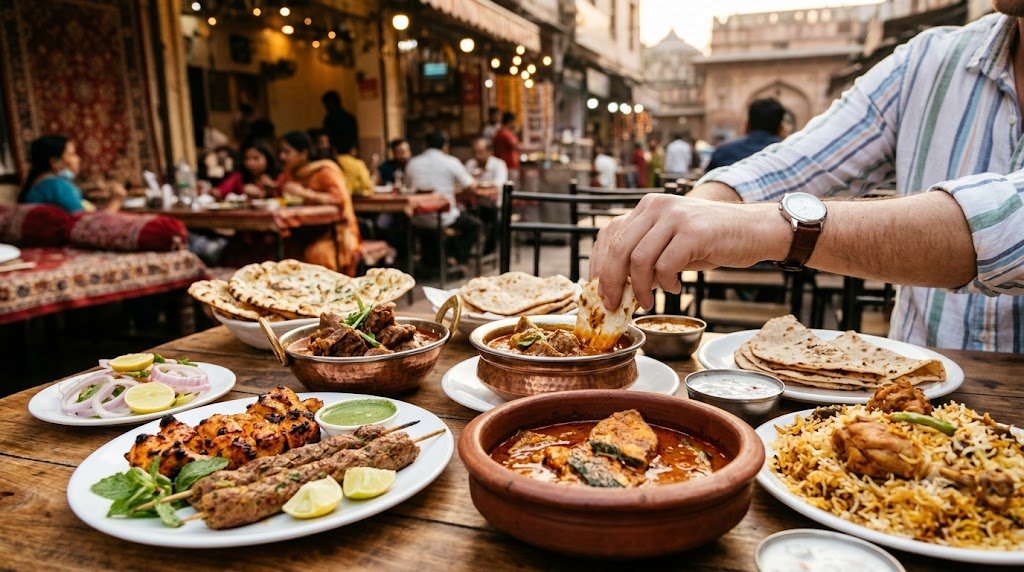
India’s food scene changes dramatically from one region to the next. While many Indians follow vegetarian diets for cultural or religious reasons, non-vegetarian options are widely available—especially in coastal areas, the North, and the Northeast. Chicken, mutton (usually goat, sometimes sheep), pork, and seafood are the most common and traveler-friendly choices.
Beef is restricted or taboo in many places, particularly in Hindu-majority areas, so treat it carefully and stick to regions where it is openly served.
Prioritize hygiene: choose busy restaurants, reputable hotels, or well-reviewed local spots. Street food can be excellent but stick to places with high turnover.
Ask for milder spice levels if needed—most kitchens will adjust.
“Non-veg” on a menu signals meat dishes. Below is a state-by-state guide grouped by region, focusing on what is readily available and worth seeking out.
North India
Hearty, spice-forward meats—often grilled in a tandoor or slow-cooked—are the norm. Look for family-run dhabas and busy market eateries.
Himachal Pradesh
🐐Local mutton is tender and flavorful thanks to hill grazing. Try it in Shimla cafés or Manali tourist restaurants. Pair with rice or local breads.
Haryana
🍗Robustly spiced chicken stands out. Head to Chandigarh eateries or Gurgaon’s urban restaurants for reliable versions.
Punjab
🍗🔥Famous for rich, marinated grilled chicken (think tandoori and butter chicken styles). Amritsar street stalls near the Golden Temple serve excellent options alongside fresh breads. Busy spots here tend to be safer for first-timers.
Uttarakhand
🐐Mutton from local goats is a highlight in the Garhwal and Kumaon hills. Dehradun markets and Rishikesh riverside places are convenient.
Uttar Pradesh
🍗🐐🍢Chicken and mutton are staples. Lucknow’s old city (Chowk area) is known for historic kebab houses—seekh, galouti, and similar preparations. These are among the most refined meat experiences in the North.
📍Note: Although Jammu and Kashmir is a union territory, its lamb and mutton dishes remain iconic. Srinagar houseboat restaurants and Pahalgam eateries are classic spots.
West India
Coastal seafood meets strong inland meat traditions. Christian communities in Goa keep pork central.
Goa
🐖🦐Pork is the standout—juicy, well-seasoned preparations (including classic vindaloo-style). Beef and seafood are also widely available. Panaji taverns and Calangute beach shacks serve fresh versions. Goa is one of the more relaxed places for foreign travelers trying non-veg food.
Gujarat
🍗🐐Largely vegetarian, but chicken and mutton appear in Muslim neighborhoods. Ahmedabad’s old city lanes have quiet, reliable spots.
Maharashtra
🍗🐐🐟Chicken and mutton dominate inland; seafood shines on the coast. Mumbai’s Mohammed Ali Road and Pune’s Koregaon Park area are popular for quality options.
Rajasthan
🐐Desert-reared goat mutton is robust and slightly gamey. Jaipur’s walled-city restaurants and Jodhpur fortside places often serve royal-style preparations. Expect richer gravies here.
South India
Coastal states emphasize seafood; inland areas focus on chicken and mutton with bold, often fiery flavors. Homestays and beachside cafés are good bets.
Andhra Pradesh
🍗🐐🌶️Fiery chicken and mutton. Vijayawada riverfront stalls and Visakhapatnam coastal spots deliver intense flavors—ask for less chili if preferred.
Karnataka
🍗🐐🐟Chicken, mutton, and coastal fish. Bengaluru food streets and Mangalore port-area restaurants highlight regional styles.
Kerala
🥩🍗🐟🦐Beef (where available), chicken, and excellent seafood (fish, prawns). Kochi harbor markets and Alleppey backwater houseboats are ideal. Kerala is one of the more open places for beef.
Tamil Nadu
🍗🐐🐟Chicken, mutton, and coastal fish. Chennai’s Marina Beach area and Madurai temple-town eateries serve lively versions.
Telangana
🐐🍗🍚Rich, aromatic mutton and chicken. Hyderabad’s Charminar bazaar area is famous for biryani and related dishes—legendary for good reason.
East India
Freshwater fish and subtler spices are common, with meat more prominent in some communities. Riverside markets work well.
Bihar
🐐🍗🐟Mutton, chicken, and Ganges fish. Patna’s older quarters and Bodh Gaya pilgrim eateries offer straightforward, flavorful options.
Jharkhand
🍗🐐Chicken and mutton from forested areas. Ranchi’s tribal markets and Jamshedpur diners are accessible.
Odisha
🐟🦀🐐Seafood (fish, crab) plus mutton. Bhubaneswar temple-adjacent stalls and Puri beachside spots are convenient.
West Bengal
🐟🐐Fish is central, with mutton and lamb close behind. Kolkata’s Park Street restaurants and Sundarbans eco-lodges serve fresh catches. Expect mustard-oil notes in many dishes.
Central India
Inland focus on gamey meats, usually in curries. Urban centers near national parks are practical bases.
Chhattisgarh
🍗🐐Everyday chicken and mutton with regional twists. Raipur central markets and Bilaspur local eateries are reliable.
Madhya Pradesh
🐐🍗Mutton (gosht) is prominent alongside chicken. Bhopal’s Chowk area and Indore street-food hubs are vibrant and popular with travelers.
Northeast India
Bold flavors, with pork and beef more common in Christian and tribal communities. Stick to established restaurants in state capitals and avoid any wild or unregulated meats.
Arunachal Pradesh
🐖🥩🍗Locally reared pork and beef, plus chicken. Itanagar markets and Tawang monastery-town eateries introduce the styles.
Assam
🐟🦆🐖Fish, duck, and pork, often with smoky notes. Guwahati riverside restaurants and Kaziranga park lodges are good options.
Manipur
🐟🐖Fish and pork staples. Imphal’s Ima Keithel market and Loktak Lake floating eateries offer distinctive tastes.
Meghalaya
🐖🥩Pork and beef dominate. Shillong’s Police Bazaar cafés and Cherrapunji hill stations serve hearty meals.
Mizoram
🐖🥩🎋Often smoked pork and beef with bamboo influences. Aizawl markets are the practical place to try them.
Nagaland
🐖🥩🍗Pork and beef are central, with chicken also available. Kohima (near the war memorial area) and Dimapur transit spots are traveler-friendly.
Sikkim
🐖🥩Pork and beef suited to cooler weather. Gangtok’s MG Marg pedestrian zone has cozy, reliable restaurants.
Tripura
🐟🐖Lake and forest fish plus pork. Agartala palace-adjacent eateries highlight local versions.
Practical Tips for Travelers
Beef caution: Common and accepted in Kerala, Goa, and much of the Northeast. Restricted or avoided elsewhere—do not assume it is available.
Spice and digestion: Many dishes are spicy. Request milder versions and consider starting with familiar proteins (chicken) before trying stronger flavors. Drink bottled water; yogurt-based sides (raita or curd) help balance heat.
Where to eat safely: Busy places with high turnover are generally better. Hotel restaurants and well-reviewed spots in tourist areas offer consistency. Street food is fine at crowded stalls serving hot, freshly cooked items.
Ordering and pairing: Look for “non-veg” sections. Meats often come with rice, flatbreads (roti, naan, paratha), or local specialties. Many places will adjust oil and chili levels on request.
Timing and context: Meat dishes are everyday food in many regions, not just special occasions. Coastal seafood is often freshest near the shore; inland mutton benefits from slow cooking.
🥩 Beef | Status |
|---|---|
Kerala | ✅ Common and accepted |
Goa | ✅ Common and accepted |
Much of the Northeast | ✅ Common and accepted |
Elsewhere | ⚠️ Restricted or avoided—do not assume it is available. |
India’s meat dishes reward curiosity when approached with basic hygiene awareness and cultural sensitivity. Focus on regional specialties rather than chasing every protein, and you will taste the country’s real variety. Safe travels and good eating.