🍛 India offers enormous variety for food lovers, but the clear split between vegetarian (“veg”) and non-vegetarian (“non-veg”) food is more pronounced than in most countries. A large share of the population follows vegetarian diets for religious, cultural, or ethical reasons. Knowing how locals define these categories helps you order confidently, avoid surprises, and show basic cultural awareness.
⚡ Quick Reference for Travelers
Menus and packaging use “veg” / “non-veg” and the green/brown dot system—learn to spot them quickly.
Eggs count as non-veg; pure-veg places usually exclude them.
Pure-veg restaurants eliminate cross-contamination risk.
Always ask if you have doubts about ingredients or preparation.
Regional differences are large: expect more seafood and meat in coastal southern and eastern states, and stronger vegetarian traditions in western and some northern areas.
During religious festivals or near major temples, vegetarian food becomes even more dominant.
🍗 What “Non-Vegetarian” Means in India
Non-veg food includes any dish or product containing meat, poultry, seafood, or animal flesh. This covers beef, mutton (usually goat), pork, chicken, fish, shellfish, and—importantly—eggs.
Locals use the term “non-veg” constantly on menus, at street stalls, and in everyday conversation. It is far more common than simply saying “meat.”
Most Indian vegetarians practice lacto-vegetarianism: they avoid meat, poultry, fish, and eggs but freely eat dairy products such as milk, yogurt, paneer (cottage cheese), cheese, and ghee. A “pure veg” meal therefore contains no animal flesh or eggs, though it may include butter or paneer.
📊 Surveys indicate that 62–71% of Indian households eat non-veg items at least occasionally, and overall non-veg consumption has been rising.
🥚 The Egg Question
Eggs are almost always treated as non-vegetarian in India.
While many Western countries classify eggs as vegetarian, the Indian view groups them with animal products because they come from chickens and are associated with potential life. This perspective is influenced by Hindu and Jain traditions that emphasize avoiding harm to living beings.
Some people call themselves “eggetarians”—they eat eggs but no meat or fish. In restaurants, eggs usually appear in the non-veg section of the menu. Pure-veg establishments often refuse to serve them at all.
Commercially sold eggs are typically unfertilized, yet the cultural classification remains.
Always clarify your preference rather than assuming eggs are acceptable in a vegetarian context.
🔍 Spotting Non-Veg on Packaged Foods: The Dot System
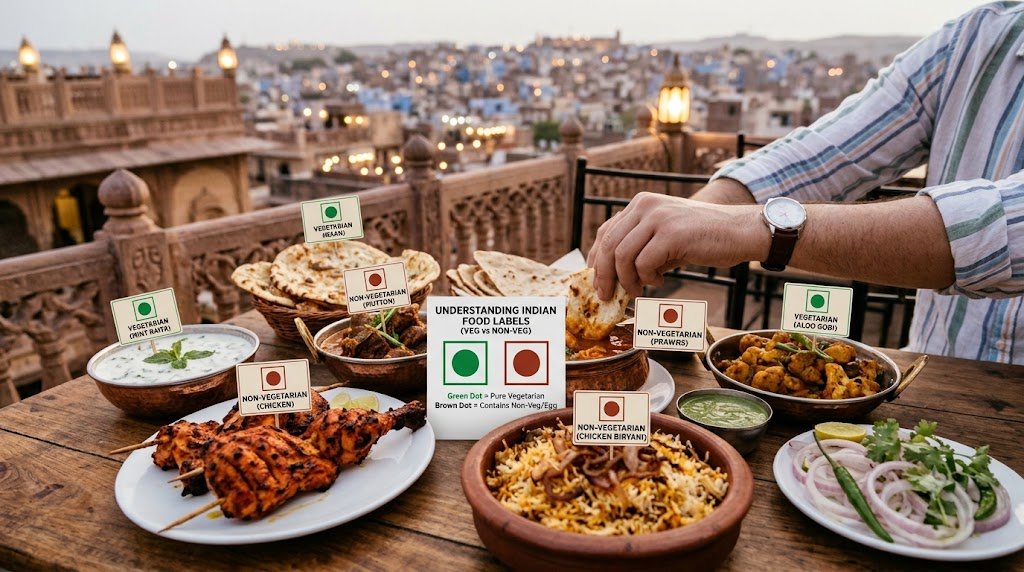
India has a simple, mandatory labeling system regulated by the Food Safety and Standards Authority of India (FSSAI) since 2011. Look for a small symbol on packaging:
Symbol | Meaning |
|---|---|
A green dot inside a green square | 🟢 vegetarian (no meat, fish, poultry, or eggs). |
A brown (sometimes red or maroon) dot inside a brown square | 🟤 non-vegetarian. This can include meat extracts, eggs, or other animal-derived ingredients. |
The system applies to all packaged foods, including imports. A chocolate bar containing egg-based emulsifiers receives a brown dot even if it contains no meat. Products that contain only eggs as the non-veg ingredient still use the brown symbol and may note this on the label.
Green-dot items can still contain dairy, so vegans must check the ingredients list for milk solids, honey, or similar.
These symbols also appear on takeaway containers and buffet displays. For color-blind travelers, the brown/non-veg mark is often shaped as a triangle for easier distinction.
🧁 Eggless Alternatives
Because so many people avoid eggs, Indian food adapts easily. Bakeries routinely sell “eggless” cakes, pastries, muffins, and some breads. Common substitutes include yogurt, condensed milk, or baking soda to achieve similar texture. Savory dishes rarely rely on eggs.
Classic street foods such as pav bhaji (spiced vegetable mash with soft bread rolls) and chole bhature (chickpea curry with fried bread) are naturally egg-free.
For breakfast, idli (steamed rice cakes) and dosa (fermented rice-and-lentil crepes) are reliable, widely available, and often fully vegan.
Local stores also stock egg replacers if you are cooking at a homestay.
🍽️ Dining Out: Practical Tips
Most restaurants divide menus into clear “veg” and “non-veg” sections. Pure-veg restaurants do not serve any non-veg food and usually keep kitchens free of meat and eggs; some will not allow non-veg items to be brought onto the premises.
In mixed restaurants, popular non-veg dishes include butter chicken, various kebabs, fish curry, and mutton preparations. Vegetarian options remain plentiful everywhere.
Watch for hidden ingredients: some gravies use chicken stock, and certain baked goods contain eggs.
Simple phrases help:
Regional patterns matter.
Region | What to expect |
|---|---|
🌴 Kerala and West Bengal | seafood and other non-veg dishes are common. |
🏜️ Gujarat and parts of Rajasthan | vegetarian food dominates because of strong Jain and Hindu influences; some places even avoid root vegetables such as onion and garlic. |
Busy places with high customer turnover are generally safer for hygiene. Hotel restaurants and well-reviewed spots in tourist areas offer consistency if you prefer more controlled environments.
🕉️ Cultural and Religious Context
The veg/non-veg distinction is closely linked to religion.
Hinduism emphasizes ahimsa (non-violence), which leads some to vegetarianism.
Jains take stricter measures and avoid eggs and anything that might harm microscopic life.
Many Hindus and Muslims, Christians commonly eat non-veg food, though beef and pork remain sensitive for religious reasons in many communities.
During festivals such as Navratri, even regular non-veg eaters often switch temporarily to vegetarian meals.
Respecting these norms improves your experience. Sharing a traditional veg thali (a platter of several small dishes) can be a memorable cultural introduction.
Indian non-veg food is not uniformly fiery—dishes such as tandoori chicken or Goan-style fish preparations can be milder and approachable.
🍢 Whether you prefer kebabs, fish curry, or paneer-based dishes, India’s food culture is adaptable once you understand the local definitions. Knowing the difference between veg and non-veg, reading the dots, and asking simple clarifying questions lets you eat with confidence and fewer surprises. Safe travels and enjoyable meals.