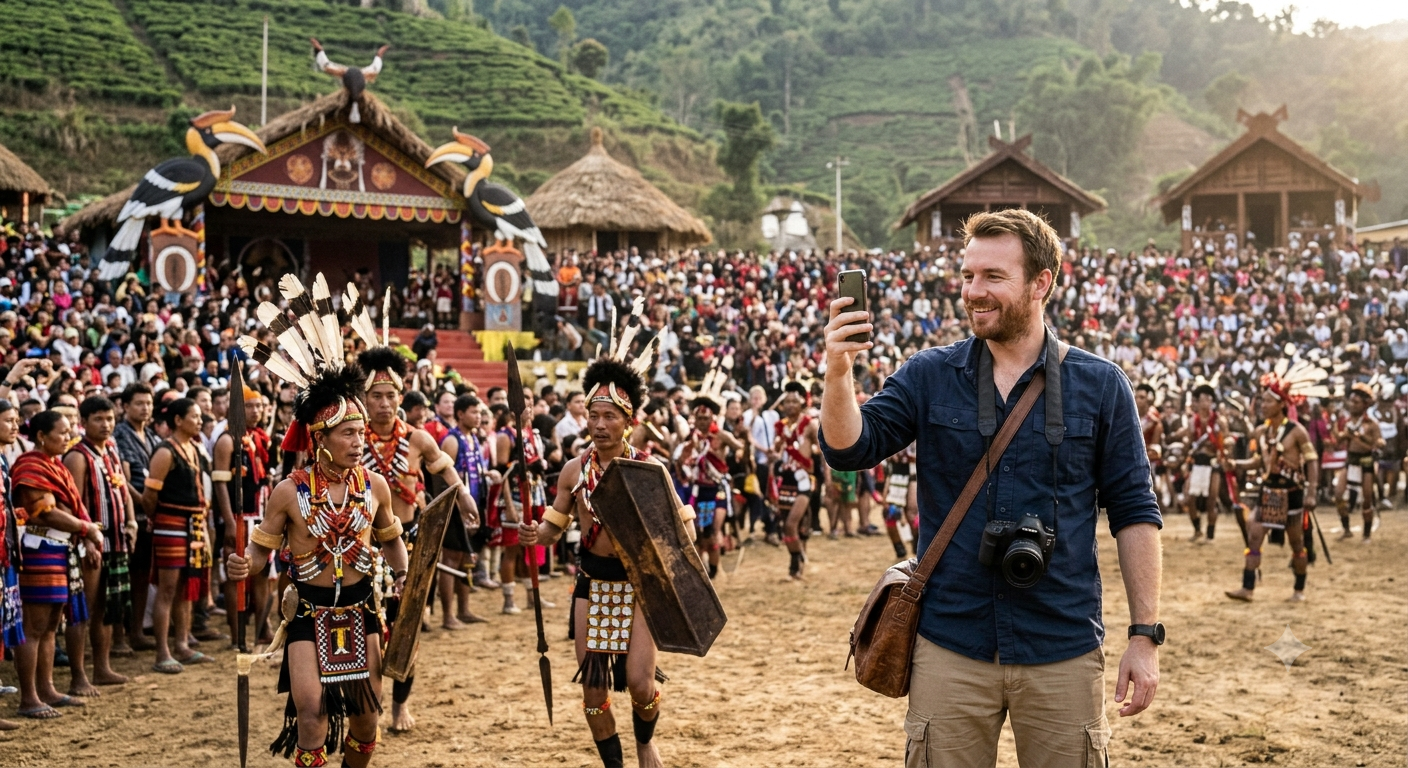
India is less a single country than a collection of distinct cultural worlds. Each state has its own languages, clothing styles, food traditions, and festival calendar. For first-time international visitors, this diversity is exciting—and can feel overwhelming. This guide covers fourteen of India’s most iconic regional festivals, fairs, and cultural experiences. It combines cultural context with practical details: what to eat, what to buy, how to navigate crowds, and how to stay safe and respectful.
Use this as a planning tool. Many of these events draw large crowds and require advance bookings. Always check exact dates, as most follow the lunar calendar and shift slightly each year.
🗓️ Quick Glance
# | Experience | Where | When |
|---|---|---|---|
1 | Old Delhi | Visit 7:30–10:30 AM or after 6 PM | |
2 | Pushkar, Rajasthan | Kartik Purnima (usually October/November) | |
3 | Kolkata | September/October | |
4 | Kisama, Nagaland | Early December | |
5 | Kerala | August/September | |
6 | Barsana & Mathura | February/March | |
7 | Mumbai | August/September | |
8 | Kutch, Gujarat | November to February | |
9 | Mysore, Karnataka | September/October | |
10 | Varanasi | November (Kartik Purnima) | |
11 | Ladakh | June or July | |
12 | Gujarat | September | |
13 | Assam | Mid-April | |
14 | Prayagraj, Haridwar & more | Every three years |
🧭 Jump To
1. Old Delhi: Street Food and Mughal Heritage
Old Delhi (Shahjahanabad) is a dense maze of 17th-century lanes where history is lived daily through food, trade, and religion. Chandni Chowk delivers an immediate immersion into Mughal-era culinary traditions.
Street food route and must-try dishes
- Paranthe Wali Gali: Historic lane of shops frying stuffed parathas in large cast-iron pans of ghee. Order aloo (spiced potato), paneer, or bitter gourd versions, served with tangy pumpkin curry.
- Old Famous Jalebi Wala: Operating since 1884 at the corner of Dariba Kalan. Thick, crispy jalebis soaked in saffron syrup pair well with rabri (thickened condensed milk).
- Jama Masjid kebab lanes: After sunset, head to the lane facing Gate 1. Seekh kebabs (minced spiced meat on skewers) and slow-cooked nihari (rich beef or mutton stew) come with hot tandoori naan.
Handicrafts and markets
- Khari Baoli: Asia’s largest wholesale spice market. Buy saffron, whole cardamom, Kashmiri chili powder, and dried fruits.
- Dariba Kalan: Silver jewelry, nose pins, and attar (traditional non-alcoholic perfumes).
Practical tips
- Visit 7:30–10:30 AM for breakfast items before crowds peak, or after 6 PM for kebabs.
- Choose stalls with high turnover where food is cooked fresh at high heat. Drink only sealed bottled water or carbonated drinks.
- Carry a scarf to cover your head at Gurudwara Sis Ganj Sahib or Jama Masjid.
- The area is chaotic and best explored on foot or by cycle rickshaw. Keep valuables secure and stay aware of your surroundings.
2. Pushkar Camel Fair, Rajasthan
Held around Kartik Purnima (usually October/November), this is one of the world’s largest livestock fairs combined with a major pilgrimage. Nomadic herders from the Thar Desert bring camels, horses, and cattle to trade.
Highlights
- Early morning on the trading grounds offers the best light on decorated animals and traders.
- Stadium events include longest-moustache contests, turban-tying competitions, and camel beauty pageants.
- Evening aarti (fire ritual) on the ghats of sacred Pushkar Lake.
Food (strictly vegetarian and alcohol-free town)
- Dal baati churma: Wood-fire baked wheat balls crushed into ghee, served with spicy dal and sweet churma.
- Malpua: Sweet fried pancakes soaked in syrup, best at Halwai Gali.
- Lassi in kulhad (clay cups).
Souvenirs
- Bandhani (tie-dye) scarves, block-printed quilts (jaipuri razai), embroidered tapestries.
- Camel-leather bags, journals, and juttis (traditional slip-on shoes).
Practical tips
- Politely refuse “flower offerings” from touts on the ghats; a firm “no, thank you” works.
- Always ask before photographing herders or people bathing.
- Book heritage guesthouses or tent camps months ahead—rooms fill early.
- Days are warm; evenings cool. Dust is constant, so bring a scarf and closed shoes.
3. Kolkata: Durga Puja
UNESCO-listed as Intangible Cultural Heritage, Durga Puja turns Kolkata into a week-long open-air art festival each autumn (September/October). More than 40,000 temporary pandals house handmade clay idols of Goddess Durga.
How to experience it
- Visit Kumartuli (potters’ quarter) 2–3 weeks before the festival to watch artisans sculpt idols from Ganges clay.
- Pandals range from traditional temple recreations to contemporary art installations, built from bamboo, fabric, and recycled materials.
- Night hopping under millions of lights is the peak experience.
Food
- Kathi rolls at Nizam’s or Kusum (kebabs in flaky egg-layered paratha).
- Puchka (Kolkata-style pani puri with spiced potato and tamarind water).
- Free bhog at community pandals: khichudi, labra (mixed vegetables), and tomato chutney.
- Sweets: rasgulla, mishti doi, sandesh.
Handicrafts
- Taant and Baluchari sarees.
- Dokra metal craft (lost-wax technique).
Practical tips
- Use the Metro or walk between clusters; taxis struggle with road closures.
- Check West Bengal Tourism for foreigner/VIP passes that reduce queue times at popular pandals.
- Crowds are dense and enthusiastic—stay patient and keep belongings close.
4. Nagaland: Hornbill Festival
Held in early December at Kisama Heritage Village near Kohima, the “Festival of Festivals” gathers all 17 major Naga tribes. It offers rare access to music, martial traditions, attire, and folklore of Northeast India.
Highlights
- Walk through authentic morungs (tribal communal houses) built by each tribe.
- Warrior dances, war cries, and log-drumming.
- Nightly Hornbill International Rock Contest showcasing the region’s strong indie and rock scene.
Food
- Smoked pork with axone (fermented soybean paste) and local chilies.
- Dishes featuring bhoot jolokia (ghost pepper).
- Zutho (mildly sweet-sour fermented rice beer).
Handicrafts
- Tribal shawls with specific colors and motifs indicating identity and status.
- Woodcarvings, warrior masks, and beadwork.
Practical tips
- Foreign tourists no longer need a Restricted Area Permit, but register at police checkposts on arrival and keep passport/e-Visa copies ready.
- December nights drop below 5°C—pack thermal layers, a heavy jacket, and sturdy shoes.
- Book homestays early; hotel space in Kohima is limited and offers better cultural immersion.
5. Kerala: Onam and Vallam Kali
Onam (August/September) celebrates the mythical King Mahabali with ten days of floral art, boat races, and pageantry across Kerala’s backwaters.
Highlights
- Nehru Trophy Boat Race in Alappuzha: 100-foot snake boats with up to 100 synchronized oarsmen.
- Daily pookkalam (intricate floral carpets) at house entrances.
- Pulikali (tiger dance) in Thrissur—men painted as tigers and leopards dance through the streets.
Food
- Onam Sadya: Up to 26 vegetarian dishes on a banana leaf, including avial, olan, puli inji, and palada pradhaman.
Handicrafts
- Kasavu handlooms (off-white cotton with gold zari).
- Nettipattam (golden elephant caparisons).
- Nettur petti (carved wooden jewelry boxes).
Practical tips
- Buy official pavilion tickets for the boat race weeks ahead; riverbank spots fill by midday under strong sun.
- Eat sadya with your right hand only. Fold the banana leaf top-down after finishing to signal satisfaction.
- Combine with a short backwater houseboat stay for a fuller experience.
6. Barsana & Mathura: Lathmar Holi
While Holi is celebrated nationwide (February/March), the Braj region (Mathura, Vrindavan, Barsana) holds a distinctive, energetic version called Lathmar Holi up to a week earlier.
Highlights
- Women playfully beat men with long wooden poles (lathis) while men protect themselves with leather shields—rooted in the Krishna-Radha legend.
- Phoolon Ki Holi at Banke Bihari Temple in Vrindavan: priests shower devotees with fresh flower petals instead of dye.
Food
- Thandai (milk drink with nuts, saffron, rose, and spices).
- Bedmi puri with aloo sabzi.
- Mathura peda (dense caramelized milk sweet).
Handicrafts
- Parchinkari (marble inlay with semi-precious stones).
- Brass idols, lamps, and temple bells.
Practical tips
- Protect cameras and phones with sealed plastic bags or waterproof cases—color and water are everywhere.
- Wear old full-sleeved white cotton clothes you can discard. Oil your hair or wrap it to reduce permanent staining.
- Crowds are intense; stay with a group and keep valuables secure.
7. Mumbai: Ganesh Chaturthi
For ten days in August/September, neighborhoods across Mumbai install elaborate Ganesha idols. The festival ends with massive immersion processions.
Highlights
- Lalbaugcha Raja draws millions seeking a brief blessing.
- Visarjan day: processions with Nashik dhol drums carry idols to Girgaon Chowpatty for immersion.
Food
- Ukadiche modak (steamed rice-flour dumplings with coconut-jaggery filling).
- Puran poli (sweet lentil-stuffed flatbread with ghee).
- Vada pav (potato fritter in a bun with garlic chutney).
Handicrafts
- Eco-friendly Shadu Mati clay idols.
- Traditional Kolhapuri chappals.
Practical tips
- On immersion day, avoid dense waterfront crowds. Watch from a high-floor hotel balcony or join a guided group.
- Carry high-quality earplugs if walking near drumming troupes.
- Public transport and walking are often faster than taxis during peak hours.
8. Rann Utsav, Gujarat
Running November to February in the Great Rann of Kutch, this festival celebrates Kutchi folk arts against the white salt desert.
Highlights
Food
- Kutchi dabeli (spicy-sweet potato mixture in a bun).
- Bajra rotlo with lasun chutney and white butter.
- Sev khamani.
Handicrafts
- Kutchi embroidery and mirror work from Banni villages.
- Ajrakh block printing with natural dyes.
- Rogan art (practiced by a single family in Nirona).
Practical tips
- Days are hot; nights near freezing—pack layers and a windproof jacket.
- Obtain a visitor permit online or at Bhirandiyara checkpoint.
- Book Tent City packages early; options range from basic to luxury.
9. Mysore Dasara, Karnataka
Ten days in September/October mark the victory of good over evil. Mysore Palace lights up with nearly 100,000 bulbs.
Highlights
- Jumbo Savari on Vijayadashami: a caparisoned elephant carries a 750 kg golden throne with the Goddess Chamundeshwari idol in a 5 km procession.
- Classical Carnatic music and Bharatanatyam performances in the palace courtyard.
Food
- Mysore pak (ghee-rich gram-flour sweet).
- Bisi bele bath.
- Mysore masale dosa.
Handicrafts
- Mysore silk sarees.
- Sandalwood carvings and oils.
- Channapatna lacquered wooden toys.
Practical tips
- Reserve grandstand seats through Karnataka Tourism well in advance.
- A telephoto lens helps capture the procession from crowded barriers.
- The palace illumination is best viewed after dark.
10. Dev Deepawali, Varanasi
On Kartik Purnima (November), the “Diwali of the Gods” sees deities believed to descend to bathe in the Ganges. All 84 ghats light up with over a million diyas.
Highlights
- Synchronized maha aarti with multi-tiered brass lamps and chanting.
- Boat rides at dusk along the illuminated riverfront.
Food
- Banarasi kachori with jalebi for breakfast.
- Tamatar chaat.
- Malaiyyo (winter frothy milk cream sweet).
- Banarasi paan.
Handicrafts
- Banarasi brocade silk.
- Wooden religious toys and gulabi meenakari enamel work.
Practical tips
- Book boats and captains months ahead through your hotel or a verified operator.
- Wear easy-to-remove shoes for narrow galis and crowded boat boarding.
- The city is intense; a local guide helps with logistics and cultural context.
11. Hemis Festival, Ladakh
In June or July at the 17th-century Hemis Monastery (around 11,500 ft), this celebration marks the birth anniversary of Guru Padmasambhava.
Highlights
- Cham masked dances by monks in brocade robes and carved wooden masks.
- Every 12 years, a massive silk thangka of Guru Padmasambhava is unfurled.
- Stark Himalayan backdrop with prayer flags and ritual horns.
Food
- Thukpa (noodle soup).
- Momos with chili chutney.
- Butter tea (gur gur chai).
Handicrafts
- Pashmina shawls from Changthangi goat wool.
- Prayer wheels and singing bowls.
Practical tips
- Acclimatize 36–48 hours in Leh before traveling to Hemis to reduce risk of altitude sickness.
- Maintain silence during dances; avoid flash photography inside prayer halls.
- Pack layers, sunscreen, and lip balm—the high-altitude desert is harsh.
12. Tarnetar Fair, Gujarat
Held in September near Thangadh, this rural fair centers on courtship, tribal mythology, and folk dance.
Highlights
- Young men carry elaborately embroidered umbrellas to attract potential brides, linked to the Draupadi swayamvar legend.
- Continuous Garba and Raas dancing around the temple complex.
Food
- Fafda jalebi with papaya chutney.
- Handvo.
- Rotla with ringan bhartha.
Handicrafts
- Embroidered umbrellas with mirrors and tassels.
- Rabari tribal embroidery.
Practical tips
- Infrastructure is basic. Stay in Rajkot or Surendranagar and hire a driver for the day.
- Dress modestly and always ask before photographing people. This remains a genuine rural gathering.
13. Bohag Bihu, Assam
In mid-April the Assamese New Year and spring harvest fill the Brahmaputra Valley with music and dance.
Highlights
- Bihu dances by young men and women in traditional silk, accompanied by dhol and pepa (buffalo-horn trumpet).
- Husori troupes go house to house offering musical blessings.
Food
- Pitha and laru (rice flour rolls with sesame-jaggery, coconut balls).
- Khar (alkaline preparation with papaya or fish).
- Duck meat curry with white gourd.
Handicrafts
- Muga silk (golden wild silk unique to Assam) and mekhela chador.
- Jaapi (conical bamboo-and-palm hats).
Practical tips
- Base yourself in Guwahati or Jorhat for evening stage performances (Bihu Sanmilans).
- Accepting tea and homemade pitha from local families is a warm custom during the festival.
14. Kumbh Mela (Prayagraj, Haridwar, and rotating sites)
Held every three years on a rotating cycle among four sacred river sites, Kumbh Mela is the world’s largest peaceful human gathering, drawing tens of millions of pilgrims.
Highlights
- Shahi Snan: processions of Naga Sadhus (ash-clad ascetics) leading ritual baths at auspicious times.
- Sprawling akhada camps with yoga, discourses, and ascetic traditions.
- Night views of the temporary city along the riverbanks.
Food (strictly vegetarian, no onion or garlic)
- Khichdi prasad from community langars.
- Kachori sabzi in leaf bowls (donas).
Handicrafts
- Rudraksha beads and malas.
- Brass and copper kamandalu (water vessels).
Practical tips
- Book official luxury tourist tents for reliable water, bathrooms, and security.
- The grounds cover many square kilometers. Carry a power bank, note your tent sector, and wear comfortable walking shoes.
- Stay hydrated, use only bottled water, and follow official signage and police directions.
📝 Planning Notes for Travelers
📅 Dates: Most festivals follow the lunar calendar. Confirm exact dates closer to travel and build flexibility into itineraries.
👥 Crowds and logistics: Popular events require advance hotel, tent, or boat bookings. Public transport and walking often outperform taxis during peak times.
🩺 Health and respect: Eat at busy stalls, drink sealed water, and carry basic medications. Dress modestly at religious sites, ask before photographing people, and remove shoes where required.
🌦️ Weather: Pack for extremes—desert heat and cold nights, Himalayan altitude, tropical humidity, or winter fog depending on the region and month.
🚆 Getting around: Domestic flights, trains, and hired cars with drivers are the most practical for multi-region trips. Northeast and high-altitude destinations need extra planning for permits and acclimatization.
These experiences reward curiosity, patience, and respect. Start with one or two that match your interests and travel style, then expand. India’s regional cultures are best understood on the ground—through its food, festivals, and the people who keep them alive.