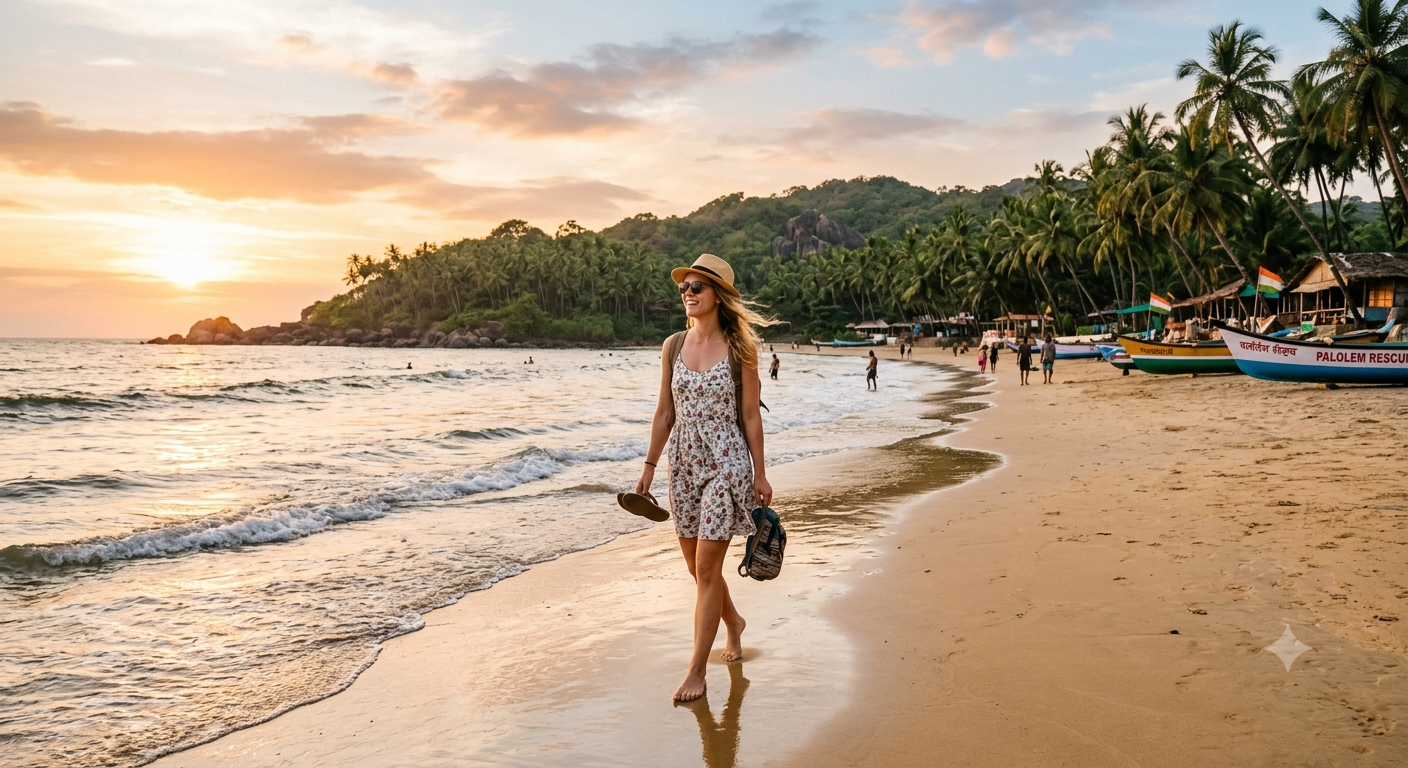
🌊 India’s 7,500-kilometer coastline runs along two very different seas—the Arabian Sea on the west and the Bay of Bengal on the east. For foreign travelers, this stretch delivers an unusually wide range of experiences: lively nightlife in former Portuguese enclaves, cliffside Ayurvedic retreats, raw coral islands, historic colonial ports, and quiet fishing villages.
🧭 Whether you want consistent surf, tropical solitude, or strong regional food, this guide covers the main coastal options with practical details so you can plan efficiently.
🌴 1. West Coast Highlights: Surf, Wellness & Solitude
Goa: The Versatile Legend
Goa remains India’s most accessible and varied coastal hub. North and South Goa feel like different destinations.
- 🎉 North Goa (energetic side): Anjuna, Vagator, Baga, and Arambol attract partygoers, digital nomads, and social travelers. Arambol is known for its bohemian scene, sunset drum circles, and paragliding. Vagator and Morjim offer higher-end beach clubs and restaurants. Expect more crowds, music, and late nights, especially around Christmas and New Year.
- 🧘 South Goa (tranquil side): Palolem, Agonda, Patnem, and Benaulim have crescent bays, calmer water for swimming, and eco-resorts set among coconut trees. These beaches suit travelers who want quieter evenings and better swimming conditions.
Gokarna, Karnataka: The Bohemian Alternative
About 140 km south of Goa, Gokarna mixes active Hindu pilgrimage culture with low-key beach life and cliff walks.
- 🏖️ Key beaches: Kudle Beach and Om Beach (shaped like the Om symbol) have basic shacks and yoga places. Half Moon Beach and Paradise Beach are more secluded and reached only by cliff path or short boat ride. Paradise Beach has almost no commercial development and remains one of the quieter spots on this stretch.
Varkala & Kovalam, Kerala: Red Cliffs & Ayurveda
Kerala combines tropical beaches with a strong wellness tradition.
- 🧗 Varkala: Known for its bright red clay cliffs above the Arabian Sea. The clifftop path is lined with cafés, yoga studios, and small shops. Below is Papanasam Beach, which has natural mineral springs. The setting is dramatic and popular with solo travelers and longer-stay visitors.
- 🗼 Kovalam: Marked by the red-and-white striped lighthouse at Lighthouse Beach. The water is relatively shallow and suitable for swimming and beginner surfing.
🏛️ 2. East Coast & Secret Havens: Heritage & Quiet
🥖 Puducherry (Pondicherry) & Tamil Nadu: French Architecture & Surf
- 🎨 Puducherry: A former French enclave with cobblestone streets, pastel buildings, and a seaside promenade. Nearby Auroville Beach and Serenity Beach have consistent surf breaks that attract intermediate and advanced surfers.
- 🏄 Covelong (Kovalam, Tamil Nadu): Just south of Chennai, this is a main surfing center with established surf schools and annual competitions.
- 🏰 Tranquebar (Tharangambadi): A 17th-century Danish settlement with heritage hotels right on the beach and a quieter, less commercial feel.
🤫 Quiet Coastal Escapes
- 🌿 Marari Beach, Kerala: Near Alleppey, this is an eco-focused option with fishing villages, low-impact resorts, and almost no nightlife. Good for travelers who want calm after exploring the backwaters.
- 🐢 Galgibaga & Talpona, South Goa: Often called Turtle Beach. Galgibaga is a protected nesting site for Olive Ridley turtles and has no party shacks or loud music. Access is controlled during nesting season.
- 🏯 Diu Island (off the Gujarat coast): A former Portuguese colony with quiet beaches such as Nagoa, colonial architecture, and the historic Diu Fort. It receives fewer international visitors than Goa or Kerala and feels distinctly different.
🏝️ 3. The Island Groups: Untouched Tropical Paradise
The Andaman & Nicobar Islands (Bay of Bengal)
- 🤿 Havelock Island (Swaraj Dweep): Home to Radhanagar Beach, frequently ranked among Asia’s best. Clear water supports excellent scuba diving and snorkeling on coral reefs. Most visitors base themselves here for several days.
- 🚲 Neil Island (Shaheed Dweep): Quieter neighbor with natural rock formations, coral bridges at low tide, and easy cycling routes. Better for travelers who prefer fewer people than Havelock.
Lakshadweep (Arabian Sea)
An archipelago of 36 coral atolls with turquoise lagoons often compared to the Maldives.
- 🐠 Bangaram & Agatti Islands: Focused on low-impact eco-tourism. Entry is limited by permit quotas, which keeps visitor numbers low and helps protect the marine environment.
📊 Coastal Destination Matrix
📍 Destination | 🌅 Vibe / Atmosphere | 🎯 Key Activities | 🗓️ Ideal Length of Stay | ☀️ Best Season |
|---|---|---|---|---|
North Goa | Vibrant, party-centric, social | Nightclubs, water sports, beach shacks | 3–5 Days | Nov – Feb |
South Goa | Laid-back, tranquil, upscale | Yoga, beach dining, luxury eco-resorts | 4–7 Days | Nov – Mar |
Varkala (Kerala) | Dramatic, spiritual, wellness-focused | Cliff walks, Ayurveda, ocean surfing | 3–6 Days | Oct – Mar |
Gokarna (Karnataka) | Bohemian, rustic, scenic | Beach hopping, cliff trekking, sunset views | 2–4 Days | Oct – Mar |
Havelock (Andamans) | Tropical, secluded, marine-rich | Scuba diving, reef snorkeling, jungle treks | 5–7 Days | Oct – Apr |
Puducherry | Cultural, heritage, relaxed | Heritage walks, French dining, surfing | 2–3 Days | Oct – Mar |
👉 Swipe the table sideways on small screens.
🍛 A Foreign Traveler’s Guide to Coastal Gastronomy
Coastal food changes noticeably between the west and east coasts because of different spices, coconut use, and cooking fats.
🌴 West Coast
- 🍤 Goan: Portuguese influence is clear. Try Goan Fish Curry (coconut paste and dried red chilies) and Prawn Balchão (spicy-tangy pickle-style curry made with local coconut vinegar).
- 🥥 Malvani & Konkani (Maharashtra–Goa border): Uses kokum (a tart dried fruit) instead of tamarind. Sol Kadhi—a pink drink of kokum juice, coconut milk, garlic, and green chili—is a common digestive.
- 🥞 Mangalorean (Karnataka): Known for Neer Dosa (thin rice crepes) with Kane Rava Fry (ladyfish in spicy semolina) or Prawn Ghee Roast.
- 🐟 Kerala: Signature dish is Karimeen Pollichathu (pearl spot fish marinated with shallots and spices, wrapped in banana leaf, and pan-roasted). Pair it with fresh tender coconut water.
🌊 East Coast
- 🌶️ Chettinad / Tamil Nadu: Heavy use of black pepper and complex spice mixes.
- 🐠 Bengali & Odia: Mustard paste (shorshe) and mustard oil dominate. Shorshe Ilish (hilsa in sharp mustard gravy) is a classic when the fish is in season.
🛟 Essential Travel Logistics, Rules & Safety
1🌦️ Seasons & Ocean Safety
Situation | Action |
|---|---|
🚩 Red flag flying | Stay out of the water |
🌇 High tide or near sunset | Avoid deep swimming |
🎣 Local fishermen present | Usually a safer swimming area |
- ☀️ Peak season (November–February): Sunny days, calmer seas, lower humidity.
- 🌧️ Monsoon (June–September): Heavy rain on the west coast. Currents become dangerous; swimming is usually prohibited and many beach shacks close.
- 🌀 Riptides: Strong undertows are common on Arabian Sea beaches, especially Varkala, Anjuna, and Gokarna. Always check flag systems on lifeguarded beaches and never swim after dark.
2🛵 Transport & Local Nuances
- 🛵 Scooter rentals: Standard in Goa, Gokarna, and Varkala (roughly ₹300–600 / $4–7 per day). You need your original driver’s license plus an International Driving Permit. Helmets are mandatory for both driver and passenger.
- 🚕 Taxis: Goa does not use Uber or Ola because of local transport unions. Use the official GoaMiles app or agree on the fare before starting. Uber and Ola work normally in Kochi, Trivandrum, Chennai, and Mumbai.
3🙏 Cultural Etiquette & Safety
- 👙 Beachwear: Western swimwear is normal on major tourist beaches in Goa, Varkala Cliff, and Havelock. Once you leave the sand for villages, markets, or temples, put on a cover-up, light shirt, or sarong.
- 🛕 Temple towns: Places such as Gokarna and Puri are active pilgrimage centers. Cover shoulders and knees when moving through town or near religious sites.
- 👩 Solo female travelers: Stay on well-lit main strips after dark (for example, Palolem’s main beach road or the Varkala clifftop) and avoid deserted beaches alone at night.
4📜 Permits & Restricted Zones
- 🏝️ Lakshadweep: Foreign visitors must travel through an authorized operator who obtains the official entry permit. Independent travel is not allowed. Lakshadweep Tourism
- ⛔ Andaman tribal reserves: Standard tourist areas (Havelock, Neil, etc.) are open. Entering designated tribal reserve zones, including areas used by the Sentinelese or Jarawa, is strictly illegal and enforced. Andaman Tourism
🎒 Recommended Packing Checklist
1🧴 Eco-safe toiletries
Reef-safe, biodegradable sunscreen is important for Havelock and Lakshadweep. Bring a reliable mosquito repellent (high-DEET or Picaridin) for palm-grove areas.
2👒 Breathable beachwear & cover-ups
Lightweight linen, quick-dry swimwear, a sun hat, and a sarong or light shirt for walking off the beach.
3🛂 Essential documents
Passport, printed visa copies, International Driving Permit, original driver’s license, and any island permits. Keep digital and paper backups.
4🩺 Beach gear & health items
Dry bag for boat trips, polarized sunglasses, oral rehydration salts, and any personal medication. A basic first-aid kit is useful on less-developed beaches.
🌅 This combination of variety—lively Goa, quiet South Indian beaches, dramatic Kerala cliffs, and restricted island atolls—makes India’s coast one of the more flexible beach destinations in Asia. Plan around the monsoon, respect local rules on the islands, and match the beach to the kind of trip you actually want (social, wellness, or pure quiet).