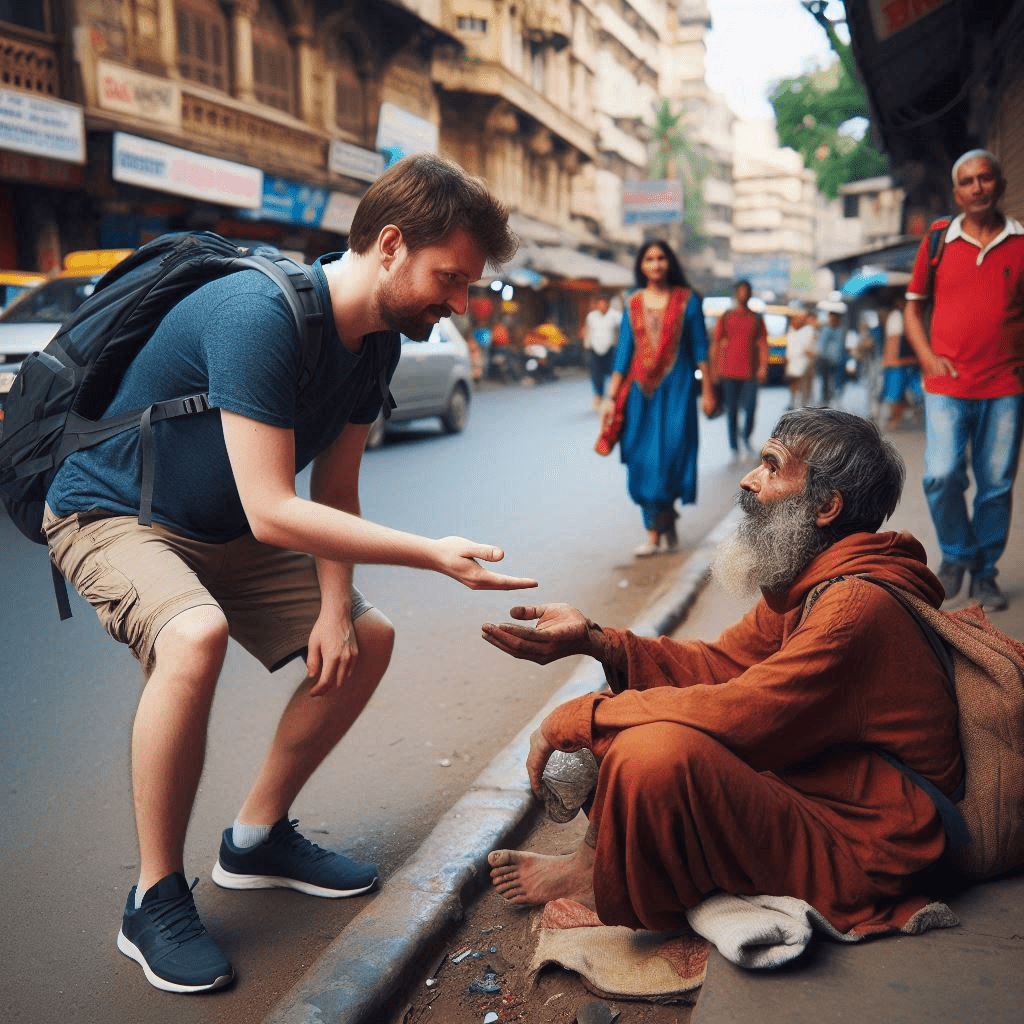
🧠 Understanding Begging in India
Poverty is a key driver of begging, but the issue is multifaceted. Some individuals beg due to genuine need — lack of employment, disability, or homelessness. However, organized begging syndicates also exist, exploiting vulnerable people, including children and adults, for profit. These groups may stage elaborate scenarios to tug at your heartstrings. Knowing this helps you make informed choices about how to respond.
💰 Should You Give Money?
Deciding whether to give money is tricky. Here’s a balanced look at the options:
Option |
Pros |
Cons / Watch-out |
|---|---|---|
💵 Give cash directly |
Immediate and easy |
May go to syndicate leaders; can foster dependency; children kept from school |
🏢 Donate to NGOs |
Creates lasting impact; addresses root causes |
Requires research before your trip |
🍌 Offer food / water |
Meets immediate needs directly |
Stick to packaged or freshly prepared food from reputable vendors |
🤝 Alternatives to Giving Money
If you want to help without giving cash, consider these options:
Offer Food or Water
Buying a meal, fruit, or bottled water is a direct way to meet immediate needs. Share a packet of biscuits or a banana. Stick to packaged or freshly prepared food from reputable vendors.
Carry a Small First-Aid Kit
Minor injuries are common among street dwellers. Offering a bandage or antiseptic wipe can be a practical way to help.
Provide Useful Items
Small, practical items like socks, soap, or reusable water bottles can make a difference. These are harder for syndicates to exploit and directly benefit the recipient.
⚠️ Common Begging Scams to Watch For
👶 Rented Babies
Some beggars rent infants to evoke sympathy. These babies may appear malnourished or sedated. Avoid giving money — it often benefits the syndicate, not the child.
🕵️ Syndicate-Operated Begging
Organized groups may coach children or adults to beg, sometimes exaggerating injuries or disabilities. Common near major landmarks like the Taj Mahal or India Gate.
📄 Fake Documents
Beggars may show laminated papers claiming medical emergencies or disabilities. These are often forged or outdated. Politely decline if the situation feels suspicious.
👥 Sympathy in Pairs
Two beggars may work together — one approaching directly, the other holding a sign with a sob story or pretending to be mute. This tactic relies on emotional pressure.
🕌 Religious Site Scams
Near temples, mosques, or churches, children or adults may ask for donations for “religious causes.” Verify with local authorities before contributing.
🌸 “Blessing” Scams
Someone may place a flower, string, or bindi on you as a “blessing” and then demand payment. Refuse politely but firmly, and walk away if they become aggressive.
🐾 “Animal Care” Scam
Beggars may display an injured or neglected animal (like a puppy or bird) to solicit donations for its care. The animal’s condition may be staged or exaggerated.
♿ Disability Exaggeration
Some beggars with genuine disabilities may overstate their condition to gain sympathy. It’s tough to tell, but a polite “no” is always okay.
📋 Group Petition Scam
A group, often children, may show a laminated petition with supposed donor signatures to pressure you into giving. These petitions are often fake.
🗣️ How to Respond to Begging
Here’s how to handle encounters with beggars respectfully and safely:
-
Avoid eye contact If you don’t want to engage, keep your gaze neutral and continue walking. This signals you’re not interested without being rude.
-
Carry minimal loose change Having only a few rupees on hand reduces pressure to give. Use digital payments like UPI for most transactions to avoid carrying cash.
-
Stay aware of your surroundings If a situation feels off, trust your instincts and move to a safer area. Avoid isolated spots, especially at night.
-
Handle aggression calmly If someone becomes pushy, stay calm and walk toward a crowded area or seek help from security personnel, often present at tourist sites like forts or temples.
🎒 Additional Tips for Travelers
Dress Modestly
Flashy clothing or jewelry can attract attention. Opt for simple attire that respects local norms, especially in conservative areas like rural Rajasthan or Uttar Pradesh.
Be Culturally Sensitive
Public displays of wealth — openly counting cash or wearing expensive watches — can draw unwanted attention and may seem insensitive.
Travel With a Group or Guide
In busy areas like Old Delhi or Agra’s markets, a local guide can help you avoid scams and navigate crowds.
Support Local Businesses
Buying from street vendors, small shops, or social enterprises (like handicraft cooperatives) indirectly supports communities and reduces reliance on begging.
💛 Making a Positive Impact
Compassion doesn’t always mean giving money. A smile, a kind word, or acknowledging someone’s humanity can go a long way. If you’re moved to help, consider volunteering with a local NGO or supporting initiatives that provide education, healthcare, or vocational training.
✈️ Final Thoughts
Navigating begging in India can feel overwhelming, but with awareness and preparation, you can respond in ways that align with your values. Focus on sustainable support, stay vigilant about scams, and approach each situation with empathy and respect. By doing so, you’ll not only ensure your safety but also make your journey more meaningful as you connect with India’s complex, vibrant culture.