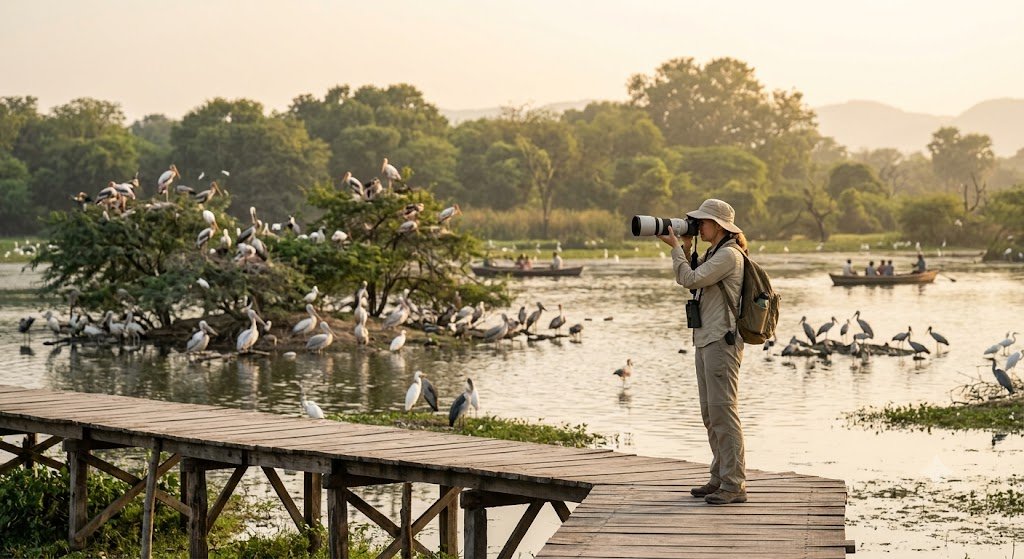
🦜 India’s tigers and elephants grab the headlines, but the country is equally outstanding for birdwatchers and marine life enthusiasts. Positioned on the Central Asian Flyway, India supports more than 1,300 bird species—nearly 12% of the world’s avian diversity. Its 7,500+ km of coastline shelters coral reefs, sea turtles, dugongs, mangroves, and rich intertidal zones. 🌊
This guide focuses on the best avian refuges and marine protected areas for foreign travelers who want experiences beyond the classic jungle safari. All original details are retained and expanded with practical logistics, access notes, timing insights, and conservation context so you can plan efficiently.
🦉 1. Top Bird Sanctuaries & Flyway Hotspots
India’s habitats range from Himalayan valleys and seasonal salt marshes to coastal lagoons, delivering excellent birding year-round. Peak diversity comes with winter migrants.
🦩 Keoladeo National Park (Bharatpur, Rajasthan)
🚣 Mangalajodi & Chilika Lake (Odisha)
🛶 Ranganathittu Bird Sanctuary (Karnataka)
🏔️ High-Altitude & Eastern Himalayan Birding (Sikkim & Arunachal Pradesh)
🐢 2. Marine Parks & Coastal Conservation Reserves
India’s marine protected areas cover ecosystems in the Arabian Sea, Bay of Bengal, and Indian Ocean.
🤿 Mahatma Gandhi Marine National Park (Wandoor, Andaman Islands)
🐬 Gulf of Mannar Marine National Park (Tamil Nadu)
🦀 Marine National Park, Gulf of Kutch (Gujarat)
🐢 Velas & Odisha Coast (Sea Turtle Nesting Sites)
- 🥚 Gahirmatha & Rushikulya (Odisha): World’s largest mass nesting (arribada) sites for Olive Ridley Sea Turtles, typically January to March.
- 🎉 Velas (Maharashtra): Community-led Turtle Festival where visitors can watch hatchlings make their way to the sea (February to April).
🧭 3. Practical Logistics & Booking Guidance
🛂 Permits & Restricted Area Rules
- Andaman & Nicobar Islands: Restricted Area Permit (RAP) requirements have been eased for many foreign tourists on select inhabited islands, but marine parks such as Wandoor and Jolly Buoy still need daily Forest Department entry permits.
- North-East Birding Belts: Arunachal Pradesh requires a Protected Area Permit (PAP) for foreign nationals, obtained via registered tour operators.
📅 Best Time for Avian & Marine Tourism
- 🦆 Birding: October to March is ideal for migrants arriving via the Central Asian Flyway.
- 🤿 Marine & Snorkeling: November to April offers the best underwater visibility and calmest conditions. Monsoon (June–September) brings rough seas and closes most marine parks.
🎒 Equipment & Gear
- 🔭 Birding: 8×42 or 10×42 binoculars and a telephoto lens (400–600 mm).
- 🌊 Marine: Reef-safe biodegradable sunscreen, personal snorkeling gear for remote sites, dry bags for boat transfers. Light, quick-dry clothing, hat, and sturdy walking shoes for intertidal walks or wetland paths.
🗺️ Additional Planning Insights
Many sites pair well with cultural or wildlife circuits: Bharatpur with Agra/Jaipur, Ranganathittu with Mysore, Chilika/Mangalajodi with Puri or Bhubaneswar temples, Gulf of Mannar with Rameswaram, Andamans as a dedicated island trip. Hire local guides—especially in wetlands and the Northeast—for higher sighting rates and better interpretation. Book boats and permits early in peak season; numbers are often limited for conservation reasons.
🌱 4. Ethical Guidelines for Birders & Marine Visitors
🦜 Birding Ethics
- 🔇 No call playback: Recorded calls stress shy or nesting birds.
- 📏 Maintain nesting distance: Especially important on boat safaris at Ranganathittu and Bharatpur. Stay on designated paths.
🐠 Marine Ethics
- 🙅 Touch-free diving and snorkeling: Never touch, stand on, or collect corals, shells, or marine life.
- 🔦 No turtle disturbance: Avoid flash photography or bright lights on nesting or hatching beaches.
- ♻️ Zero plastic: Strictly enforced at coastal and island sites to protect turtles and marine mammals.
💚 These rules protect the very wildlife you came to see and support the local communities that now depend on sustainable tourism.
📊 5. Quick-Reference Matrix: Bird & Marine Parks
Destination | Primary Ecosystem | Key Wildlife / Target Species | Best Travel Window | Gateway Airport / Hub |
|---|---|---|---|---|
🦩 Keoladeo (Bharatpur) | Freshwater Wetlands | Sarus Crane, Waterfowl, Eagles | Oct – Mar | Jaipur (JAI) / Delhi (DEL) |
🚣 Mangalajodi (Chilika) | Brackish Lagoon | Black-tailed Godwit, Irrawaddy Dolphin | Nov – Feb | Bhubaneswar (BBI) |
🏔️ Eaglenest Sanctuary | Sub-tropical Forest | Bugun Liocichla, Ward’s Trogon | Mar – May, Oct – Nov | Guwahati (GAU) |
🤿 MG Marine Park (Andaman) | Coral Reefs & Mangroves | Sea Turtles, Reef Fish, Dugong | Nov – Apr | Port Blair (IXZ) |
🦀 Gulf of Kutch Marine Park | Intertidal Coral Reefs | Reef life, Coastal Waders, Octopus | Nov – Mar | Rajkot (RAJ) / Jamnagar |
🐢 Rushikulya / Gahirmatha | Coastal Beaches | Olive Ridley Turtle (Arribada) | Jan – Mar | Bhubaneswar (BBI) |
🌅 India’s bird sanctuaries and marine parks reward slow, respectful travel. Whether you spend a morning in a silent wooden boat at Mangalajodi, walk a coral reef at low tide in Gujarat, or search for Himalayan endemics in Arunachal, these places deliver high biodiversity and strong conservation stories. Plan around the seasons, hire local expertise, follow the ethics, and you will leave with both memorable sightings and the knowledge that your visit supports the protection of these habitats.